How To Tell If Your Pond Is Stratified
A hidden 'dead zone' could be lurking at the bottom of your pond right now. Your pond isn't just one body of water—it's a multi-story building. If the basement is 'sealed' by stratification, your fish are in trouble.
Thermal stratification is a physical phenomenon where water separates into distinct thermal layers based on density. In static water bodies, solar radiation heats the surface layer, reducing its density. Because warmer water is lighter, it remains suspended above the cooler, denser water at the bottom. This creates a vertical density gradient that acts as a physical barrier, preventing the transfer of atmospheric oxygen to the lower depths.
In professional pond management, identifying this state is critical. Without intervention, the bottom layer becomes anoxic, leading to the accumulation of toxic gases and the potential for catastrophic fish kills. Understanding the mechanics of this "multi-story" system allows for the implementation of precise mechanical solutions to maintain ecological stability.
How To Tell If Your Pond Is Stratified
Stratification is the process by which a water column divides into the epilimnion (top), metalimnion (middle), and hypolimnion (bottom). In a stratified state, these layers do not mix. This lack of vertical circulation is most common in ponds deeper than six to eight feet, though shallow ponds protected from wind can also exhibit significant thermal gradients.
Visual cues are often insufficient for detecting stratification, as the surface may appear healthy while the bottom is biologically compromised. However, several diagnostic indicators can confirm the presence of a thermocline—the plane within the metalimnion where the temperature drop is most acute.
Thermal profiling is the primary method for detection. This involves measuring the water temperature at one-foot intervals from the surface to the substrate. A temperature variance of more than 3–5 degrees Fahrenheit between the surface and the bottom typically indicates a stable stratification. In advanced aquaculture, practitioners also monitor Dissolved Oxygen (DO) levels. A stratified pond will show high DO at the surface (often 7–10 mg/L) and near-zero DO at the bottom.
The presence of "muck" or organic sludge that emits a rotten-egg odor when disturbed is a secondary indicator. This smell is hydrogen sulfide (H2S), a byproduct of anaerobic decomposition that occurs only when the hypolimnion is cut off from oxygen. If your pond exhibits these symptoms, the "basement" of your water body has effectively become a dead zone.
How Thermal Stratification Functions
The mechanics of stratification are driven by the unique physical properties of water. Water reaching its maximum density at 39.2°F (4°C) is the fundamental driver of this process. As solar energy penetrates the upper water column, the molecules expand and become less buoyant.
The epilimnion, or the surface layer, is characterized by active interaction with the atmosphere. Wind energy facilitates gas exchange, ensuring high dissolved oxygen levels. This layer is usually uniform in temperature due to constant surface agitation.
Below the epilimnion lies the metalimnion. This zone contains the thermocline, where the temperature gradient is steepest. This layer acts as a "thermal curtain." The density difference between the warm water above and the cold water below is so significant that wind energy cannot overcome the resistance to mixing.
The hypolimnion is the bottom-most layer. It remains cold, dark, and isolated. Because it cannot reach the surface to shed carbon dioxide or absorb oxygen, it becomes a sink for organic matter. Bacteria in this layer consume the remaining oxygen to break down debris, eventually transitioning to anaerobic respiration. This shift produces methane, ammonia, and hydrogen sulfide, which remain trapped under the pressure of the layers above.
Benefits of Active Destratification
Mechanical destratification involves the use of aeration or circulation systems to break the thermal barrier and maintain a uniform water column. The primary objective is to increase the volume of habitable water for aquatic life and optimize biological processing of organic waste.
Homogenizing the water temperature ensures that the entire volume of the pond is available for fish. In stratified ponds, fish are often squeezed into a narrow band of water—the epilimnion is too hot, and the hypolimnion lacks oxygen. Destratification eliminates this "squeeze," reducing physiological stress and improving growth rates.
Aerobic digestion is significantly more efficient than anaerobic digestion. By delivering oxygen to the pond floor, you enable aerobic bacteria to process organic "muck." This prevents the buildup of sludge and reduces the internal loading of nutrients like phosphorus and nitrogen, which otherwise fuel harmful algal blooms.
Consistent mixing also prevents "sudden turnover." Natural turnover occurs when a cold rain or wind event rapidly cools the surface, causing it to sink and forcing the toxic, oxygen-depleted bottom water to the surface. By maintaining a mixed state, the risk of an "oxygen crash" and subsequent fish mortality is virtually eliminated.
Challenges and Common Pitfalls
The most significant risk in managing stratification is the improper initiation of aeration systems in a pond that is already heavily stratified. This is known as "artificial turnover." If a high-powered bottom diffuser is activated in mid-summer without a gradual startup, it can move massive volumes of anoxic water to the surface instantly.
This rapid mixing can strip the oxygen from the surface layer and release toxic levels of hydrogen sulfide throughout the water column. The result is an immediate and total fish kill. Professionals avoid this by using a "slug-start" or incremental startup procedure, running the system for only 15–30 minutes on the first day and slowly increasing the duration over a week.
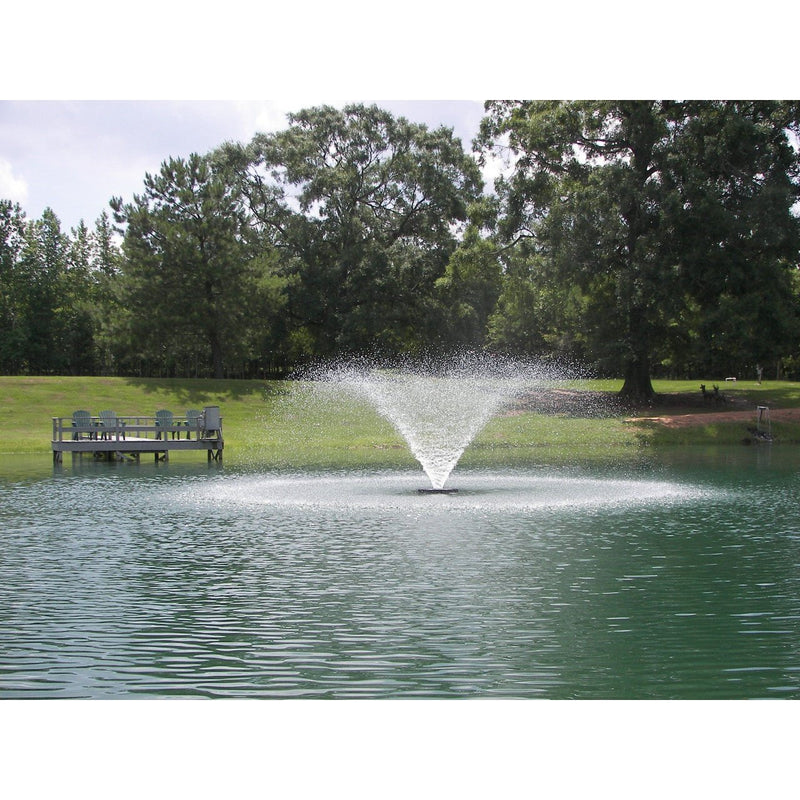
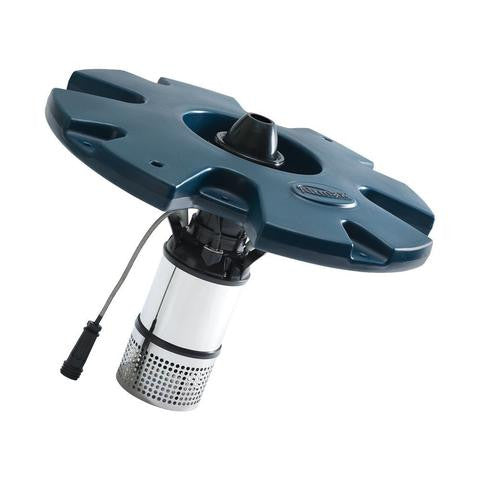
Another challenge is the "shallows" trap. Surface fountains are often used for aesthetic purposes and provide some aeration, but they rarely affect the water deeper than 4–6 feet. Relying on a fountain to destratify a 12-foot deep pond is a common technical error. The surface may look agitated, but the "dead zone" at the bottom remains intact.
Under-sizing the equipment is a frequent mistake. Aeration efficiency is measured by the volume of water moved rather than just the amount of air pumped. A system that fails to achieve a complete "turn" of the pond volume at least once every 24 hours will not effectively prevent stratification during peak summer heat.
Limitations of Destratification Systems
While mechanical mixing is highly effective, it is not a universal solution for all water quality issues. Environmental and physical constraints can limit the performance of these systems.
Pond geometry plays a critical role. Long, narrow ponds or those with irregular "fingers" may require multiple diffusion points. A single aerator in a complex-shaped pond will create an "island" of oxygenated water while leaving remote areas stratified. In these cases, the cost of the infrastructure increases significantly.
Depth is a limiting factor for surface-based aeration. Surface aerators and circulators have a diminishing return as depth increases. Conversely, bottom-diffused aeration is highly efficient in deep water but loses its effectiveness in water shallower than 4 feet because the "cone" of bubbles does not have enough vertical travel to entrain a large volume of water.
In very large lakes or reservoirs, total destratification may be energetically unfeasible. The Richardson Index—a dimensionless number used to express the stability of stratification—can be so high in deep, large water bodies that the power required to mix the layers exceeds the economic or practical limits of the site. In such environments, managers may focus on "zone aeration" rather than total mixing.
The Elder's Deep-Dip Test vs The Digital Thermal Probe
When assessing stratification, practitioners must choose between traditional manual methods and modern digital instrumentation. Both approaches provide the necessary data, but they differ in precision and labor intensity.
The traditional manual profile, sometimes referred to as the "deep-dip," involves lowering a thermometer on a weighted, marked line. The user stops the probe at specific depths, waits for the reading to stabilize, and records the data. While cost-effective, this method is prone to "sensor lag" and human error, particularly if the thermometer is not allowed sufficient time to equilibrate at each depth.
The Digital Thermal Probe represents the modern standard. These devices often utilize a thermistor or a Resistance Temperature Detector (RTD) for near-instantaneous readings. Advanced models include integrated Dissolved Oxygen sensors and depth transducers, allowing a single pass to generate a complete vertical profile of the water column.
| Factor | Manual (Deep-Dip) | Digital Thermal Probe |
|---|---|---|
| Capital Cost | Low ($10–$50) | High ($200–$1,500) |
| Data Precision | Low to Moderate | High (±0.1°C) |
| Speed of Use | Slow (5–10 mins) | Fast (< 1 min) |
| Variables Measured | Temperature only | Temp, DO, Depth, pH |
For the serious practitioner, the digital probe is the superior tool for identifying the exact depth of the thermocline and monitoring real-time changes in the oxygen profile. However, the manual method remains a valid diagnostic for occasional checks in smaller, less complex systems.
Practical Tips and Best Practices
Optimization of a pond's thermal and oxygen profile requires strategic placement of equipment. For bottom-diffused systems, place diffusers in the deepest part of the pond. This maximizes the "air-lift" effect, where the rising bubbles pull the greatest volume of cold, dense water from the bottom to the surface.
If the pond has multiple deep "holes" or basins, each basin must have its own diffuser. Water does not easily flow over underwater ridges; therefore, a diffuser in one basin will not destratify an adjacent basin separated by a shallow area.
Monitor your system during the transition seasons. In the spring and fall, the pond naturally wants to turn over as the air temperature shifts. Running the aeration system continuously during these times helps the pond transition smoothly without the risk of an oxygen crash.
Maintenance of the air compressor is vital for efficiency. Check the air filters every three months and replace the compressor diaphragms every two years. A drop in air pressure leads to smaller bubble plumes and less water movement, which can allow stratification to reform even while the system is running.
Advanced Considerations for Practitioners
Serious pond management requires a focus on Standard Oxygen Transfer Efficiency (SOTE). This metric defines how much oxygen from the air is actually dissolved into the water. Fine-bubble diffusers are significantly more efficient than coarse-bubble systems because they create a larger surface area for gas exchange.
Calculating the Biological Oxygen Demand (BOD) of the pond is another advanced step. The BOD tells you how much oxygen the organic matter and fish population are consuming. If your aeration system provides 5 lbs of oxygen per day but your BOD is 7 lbs, the pond will still trend toward anoxia despite the equipment.
Consider the "thermal refuge" in winter. In climates where the surface freezes, you may want to move diffusers to shallower water (approx. 3–4 feet deep). This allows the very bottom of the pond to remain at its densest, warmest temperature (39.2°F), providing a critical overwintering refuge for fish that would otherwise be stressed by the sub-freezing surface temperatures if the water were fully mixed.
Understanding the Richardson Index can help predict when a pond is likely to stratify. High solar radiation and low wind speeds increase the index, indicating a highly stable stratification. When the index is high, mechanical mixing systems must operate at peak capacity to maintain the water column's integrity.
Example Scenario: A 1.5 Acre Farm Pond
Consider a typical 1.5-acre pond with a maximum depth of 12 feet. In mid-July, the surface temperature reaches 85°F, while the water at 10 feet remains at 62°F. The thermocline is established at the 5-foot mark.
In this scenario, more than 50% of the pond's volume is in the hypolimnion. Because this water is isolated, its DO levels have dropped to 0.5 mg/L. The fish are crowded into the top 5 feet of water. If a sudden thunderstorm occurs, the 85°F surface water will cool rapidly and sink, displacing the 0.5 mg/L bottom water.
The resulting mixture might have a DO level of only 2.5 mg/L—below the 3.0 mg/L threshold where most fish experience acute stress. To prevent this, the owner should install a 1/4 HP bottom-diffused aerator. By running this system, the 62°F water is constantly brought to the surface to be warmed and oxygenated.
The final result is a uniform pond temperature of approximately 76°F from top to bottom, with DO levels maintained above 6.0 mg/L throughout the entire 12-foot water column. The "dead zone" is eliminated, and the risk of a turnover-related fish kill is reduced to near zero.
Final Thoughts
Thermal stratification is a natural but potentially hazardous state for any pond or lake. By separating the water into isolated layers, it creates "dead zones" that harbor toxic gases and deprive aquatic life of oxygen. Understanding the physics of the thermocline is the first step toward effective management.
Successful intervention relies on accurate detection and the implementation of appropriately scaled mechanical mixing systems. Whether using a digital probe or a traditional manual profile, identifying the stratification early allows for proactive measures that prevent catastrophic losses.
Continuous monitoring and mechanical destratification transform a "multi-story building" with a sealed basement into a fully integrated, oxygen-rich environment. This approach not only protects your current livestock but also builds the long-term biological resilience of the entire aquatic ecosystem. Applying these technical principles ensures that your pond remains a healthy, stable habitat through the most extreme seasonal shifts.