How To Prevent Summer Fish Kills In Ponds
You can pay for the cure, or get the prevention for free. A summer fish kill happens in hours, but prevention takes minutes. Don't wait until you're buying chemicals in a panic.
The thermodynamic reality of a pond changes as ambient temperatures rise. While spring may offer a stable, well-mixed water column, summer introduces thermal stratification that creates a dangerous environment for aquatic life. Understanding the mechanical and biological drivers of these events is the only way to ensure the long-term survival of a fishery.
Aquatic systems rely on a delicate balance of dissolved oxygen (DO), which is influenced by temperature, atmospheric pressure, and biological demand. When these variables shift rapidly, the resulting anoxia can wipe out an entire fish population overnight. This guide examines the technical mechanisms of summer fish kills and provides a blueprint for mechanical mitigation.
How To Prevent Summer Fish Kills In Ponds
Preventing a summer fish kill requires a focus on maintaining dissolved oxygen levels above critical thresholds, typically 2.0 mg/L for warm-water species and 5.0 mg/L for cold-water species. Summer fish kills are primarily driven by two phenomena: nocturnal oxygen depletion and sudden pond turnover.
Nocturnal oxygen depletion occurs because of the diurnal cycle of photosynthesis. During daylight, phytoplankton and aquatic plants produce oxygen as a byproduct of photosynthesis. At night, these same organisms consume oxygen through respiration. In a pond with high nutrient loads and dense algae blooms, the nighttime demand can exceed the available supply, leading to a "crash" in DO levels just before dawn.
Pond turnover is a physical event triggered by thermal stratification. As the sun warms the surface water (the epilimnion), it becomes less dense and floats on top of the colder, denser bottom water (the hypolimnion). Because these layers do not mix, the bottom water becomes anoxic as organic matter decomposes. A sudden cooling event, such as a heavy summer thunderstorm, can rapidly cool the surface water, causing it to sink and forcing the anoxic bottom water to the surface. This creates a lethal environment where oxygen levels drop to near zero across the entire water column.
Mechanical Systems and Aeration Physics
Mechanical aeration is the most effective method for preventing both nocturnal depletion and thermal stratification. The efficiency of these systems is measured through Standard Oxygen Transfer Efficiency (SOTE), which quantifies the percentage of oxygen dissolved into the water at standard conditions.
Diffused aeration systems utilize an on-shore compressor to pump air through weighted tubing to diffusers at the pond bottom. These diffusers release fine bubbles that rise through the water column. This process works via two mechanisms: direct gas transfer from the bubble surface and the "airlift" effect. As bubbles rise, they entrain large volumes of water, forcing the anoxic bottom water to the surface where it can interact with the atmosphere.
The gas transfer equation, dC/dt = KL(A/V)(Cs – Cm), illustrates why depth is critical. The rate of oxygen transfer (dC/dt) is directly proportional to the surface area of the bubbles (A) and the deficit between the saturation concentration (Cs) and the current measured concentration (Cm). Deeper placement increases the contact time between the bubble and the water, maximizing the transfer rate. Fine-bubble diffusers typically achieve an SOTE of 6.5% to 9.8% per meter of depth, making them significantly more efficient than surface-level splashers in deep water.
Benefits of Proactive Mitigation
Proactive management provides a stable habitat that supports higher fish carrying capacities and faster growth rates. When DO levels are maintained at optimal levels, fish metabolism remains efficient, and stress-related diseases are minimized.
Subsurface aeration eliminates thermal stratification, which expands the usable habitat for fish. In a stratified pond, fish are often compressed into the top 4 to 6 feet of water because the deeper layers are anoxic. By mixing the entire water column, a pond owner essentially doubles or triples the volume of water available to the fishery. This also accelerates the decomposition of organic muck on the pond floor by supporting aerobic bacteria, which process waste much faster than anaerobic species.
Mechanical circulation also reduces the reliance on chemical algaecides. Maintaining constant movement and oxygenation can limit the growth of certain nuisance algae and floating plants like duckweed, which thrive in stagnant, nutrient-rich environments. This leads to a more balanced ecosystem that requires fewer expensive interventions over time.
Challenges and Technical Risks
Implementing an aeration system is not without risks, particularly when starting a system in a pond that is already stratified. A common mistake is the "rapid start" of a bottom diffuser in mid-summer. If a powerful compressor is turned on and left to run in a pond with a large anoxic hypolimnion, it can trigger an artificial turnover, killing the fish it was intended to save.
Electrical failure is another significant risk during the height of summer. If a system has been running for months and suddenly loses power during a heatwave, the pond can revert to a stratified state or experience a rapid DO crash. Pond owners must ensure that their systems are sized correctly and have a reliable power source. Undersized systems may provide a false sense of security while failing to move enough water to break a strong thermocline.
Mechanical fouling of diffusers is a frequent maintenance challenge. In waters with high calcium carbonate or iron levels, mineral scaling can clog the fine pores of a membrane diffuser. This increases backpressure on the compressor, reducing airflow and eventually leading to mechanical failure. Regular inspection and acid-washing of diffuser heads are necessary for long-term performance.
Limitations of Standard Methods
Environmental factors can sometimes exceed the capacity of standard mechanical systems. In extremely shallow ponds (less than 4 feet), diffused aeration is less effective because the bubbles have very little contact time with the water. In these scenarios, surface aerators or paddlewheels are often more efficient at providing immediate oxygen transfer, even though they do not offer the same destratification benefits as bottom-up systems.
High nutrient loading from agricultural runoff or excessive feeding can also create a Biochemical Oxygen Demand (BOD) that outpaces aeration capacity. If the influx of organic matter is too high, even a well-designed aeration system may struggle to maintain DO levels during a multi-day period of heavy cloud cover. In these cases, nutrient sequestration or physical muck removal may be required as a primary step before aeration can be fully effective.
The cost of operation is a practical boundary for many practitioners. While diffused aeration is energy-efficient, running a high-horsepower system 24/7 can result in significant utility costs. This makes the selection of high-efficiency compressors and low-friction piping essential for large-scale applications.
Comparison of Aeration Technologies
Selecting the correct hardware requires a comparison of oxygen transfer rates and mechanical longevity. The table below outlines the performance metrics for common aeration technologies.
| Technology | SOTE (Efficiency) | Ideal Depth | Primary Benefit |
|---|---|---|---|
| Fine-Bubble Diffused | 25-35% (at 10ft) | >8 feet | Total destratification |
| Surface Splasher | 8-15% | <6 feet | High surface gas exchange |
| Paddlewheel | 15-20% | Variable | Directional flow/mixing |
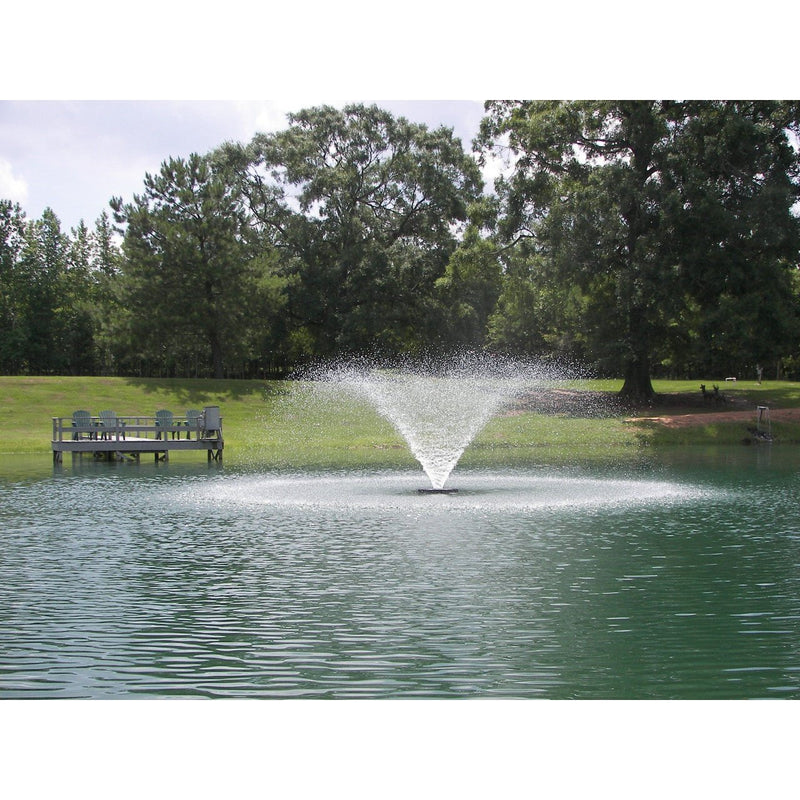
| Fountain | 2-5% | Any | Aesthetics over function |
Subsurface systems typically represent the $0 prevention model over time due to lower energy requirements and reduced chemical needs, whereas relying on emergency chemical treatments often results in a $2,000 crisis.
Practical Tips for System Optimization
Correct sizing is the foundation of a successful system. A general engineering rule for recreational ponds is to provide at least 1 CFM (cubic foot per minute) of air per 1,000 gallons of water for koi ponds, or approximately 1.5 to 2.0 horsepower per surface acre for larger farm ponds.
- Slow-Start Procedure: When installing a system in summer, run it for 15 minutes the first day, 30 minutes the second, and double the time daily for two weeks. This prevents sudden turnover.
- Diffuser Placement: Locate diffusers in the deepest sections of the pond to maximize the airlift effect. If the pond has multiple basins, each basin requires its own diffuser.
- Monitoring DO: Invest in a handheld dissolved oxygen meter. Checking levels at dawn provides the most critical data point, as this is when DO is at its lowest.
- Weighted Tubing: Always use weighted sinking tubing. Poly-tubing that floats is prone to damage from boat propellers and UV degradation.
Ensuring the air filter on the compressor is cleaned monthly will extend the life of the internal diaphragms or pistons. High temperatures in the compressor housing can lead to premature wear, so ensure the unit is placed in a vented enclosure with adequate airflow.
Advanced Considerations for Practitioners
Serious practitioners should consider the "Alpha factor" (?) and "Beta factor" (?) when calculating oxygen transfer in specific environments. The Alpha factor represents the ratio of the oxygen transfer coefficient in pond water versus clean water. In ponds with high organic loads or surfactants, the Alpha factor can drop as low as 0.4, meaning the system is only 40% as effective as its clean-water rating suggests.
Automation is the next frontier in pond management. Integrating a DO sensor with a Variable Frequency Drive (VFD) on the compressor allows the system to scale its output based on real-time oxygen levels. This not only protects the fish during unexpected weather events but also significantly reduces energy consumption by slowing the motor when oxygen levels are naturally high during sunny afternoons.
Ultrasonic algae control is another advanced technique that can be paired with aeration. By using specific sound frequencies to rupture the vacuums within blue-green algae cells, practitioners can prevent the blooms that lead to nocturnal oxygen crashes without the oxygen-consuming side effects of chemical algaecides.
Example Calculation: 1-Acre Pond Sizing
To illustrate the technical requirements, consider a 1-acre pond with an average depth of 8 feet. The total volume is 8 acre-feet, which translates to approximately 2.6 million gallons. To maintain a healthy environment for bass and bluegill, the system must be capable of moving the entire volume of the pond at least once every 24 hours.
A high-quality rocking piston compressor producing 3.5 CFM at 10 PSI, paired with two fine-bubble diffusers, would be sufficient. At a depth of 8 feet, each diffuser would move approximately 1,500 gallons of water per minute via the airlift effect. With two diffusers, the system moves 3,000 gallons per minute, or 180,000 gallons per hour. Over 24 hours, this system circulates 4.3 million gallons—well above the 2.6 million gallon volume. This provides a safety margin for peak summer temperatures when oxygen solubility is at its lowest.
Final Thoughts
The prevention of summer fish kills is a matter of managing the physical and chemical properties of water through consistent mechanical intervention. By eliminating thermal stratification and supporting the nocturnal oxygen demand, pond owners can avoid the catastrophic losses associated with pond turnover and algae crashes.
Focusing on high-efficiency diffused aeration ensures that the entire water column remains aerobic, supporting both the fish and the beneficial bacteria that process organic waste. While the initial investment in equipment requires careful planning and calculation, the long-term stability it provides is invaluable for any serious fishery manager.
Successful pond management is proactive rather than reactive. Implementing these technical strategies will provide a robust defense against the environmental stresses of summer, ensuring a thriving aquatic ecosystem for years to come. Applying these principles of fluid dynamics and gas transfer allows for a level of control that manual chemical dosing simply cannot match.