

How Much Electricity Does A Pond Aerator Use?
You don't need a massive electric bill to keep your fish alive. It is all about the motor type and the strategic application of air. Running a pond should not cost as much as running your central AC. We break down the monthly cost of every aerator type so you can save big while keeping your water crystal clear.
Effective pond management requires a shift from aesthetic-driven choices to mechanical optimization. Many pond owners fall into the trap of purchasing equipment based on surface spray height or visual "boil," often overlooking the amperage draw and the operational efficiency of the motor. A well-designed aeration system focuses on dissolved oxygen (DO) saturation levels and thermal destratification rather than decorative displays.
Understanding the relationship between wattage, depth, and airflow is the first step toward reducing operational expenses. This guide provides a technical analysis of how different motor technologies consume energy and how you can size your system to achieve maximum biological results with minimum electrical input.
How Much Electricity Does A Pond Aerator Use?
Electricity usage in pond aeration is a function of the motor’s wattage and the duration of its operation. Because most aeration systems are designed to run 24 hours a day to prevent oxygen crashes, even a small difference in power draw can lead to a significant variance in your annual utility budget.
The primary metric for measuring energy consumption in this context is the kilowatt-hour (kWh). To find the usage of any specific unit, you must identify its amperage draw and operating voltage. Most residential systems run on 115V or 230V circuits. A standard linear diaphragm pump might draw as little as 0.5 amps, whereas a high-volume surface fountain could pull 10 amps or more.
In real-world applications, a small 1/4 HP rocking piston compressor typically uses between 200 and 250 watts. If this unit runs continuously at a national average rate of $0.15 per kWh, the monthly cost is approximately $22.00 to $27.00. In contrast, a 1 HP surface fountain pulling 1,200 watts would cost over $130.00 per month. The disparity highlights why mechanical selection is the most critical variable in pond maintenance costs.
The Mechanics of Aeration Efficiency
Aeration systems operate by converting electrical energy into pneumatic or mechanical energy to move water or air. The efficiency of this conversion depends on the motor architecture. There are four primary technologies used in the industry, each with a specific energy profile.
Linear Diaphragm Pumps
These units utilize electromagnetic oscillation rather than a traditional rotating crankshaft. A magnet moves a rod back and forth, which flexes a rubber diaphragm to displace air. Because there are fewer moving parts and no rotational friction, these are the most energy-efficient units available for shallow water. They typically operate in the 20W to 100W range.
Rocking Piston Compressors
Designed for deep-water applications, rocking piston motors use a piston and a specialized cup to compress air. These are "oil-less" units, which is a requirement for aquatic environments. They are capable of overcoming significant backpressure—up to 30 PSI or more—allowing them to push air to the bottom of 50-foot-deep lakes. However, this capability comes at the cost of higher wattage, usually ranging from 1/4 HP (250W) to 3/4 HP (600W).
Rotary Vane Compressors
Rotary vane systems use a rotating rotor with sliding carbon vanes to move large volumes of air at moderate pressures. They are often used in large, medium-depth ponds (10–18 feet). They provide a high Cubic Feet per Minute (CFM) output but are less energy-efficient than linear pumps for shallow water and less pressure-capable than rocking pistons for very deep water.
Centrifugal Blowers
Blowers move massive volumes of air at very low pressure. These are rarely used for deep ponds because they cannot overcome the weight of the water (hydrostatic pressure). They are most common in shallow aquaculture tanks or commercial hatcheries where high-volume air is needed at depths of less than 3 feet.
The Impact of Hydrostatic Pressure on Power Consumption
The deeper you place an air diffuser, the harder the compressor must work to push air through it. This resistance is known as backpressure. Water exerts approximately 0.433 PSI of pressure for every foot of depth. If a diffuser is placed 10 feet deep, the compressor must generate at least 4.33 PSI just to clear the water from the line, not including friction loss from the tubing.
As backpressure increases, the amperage draw of many motors also increases. For example, a rocking piston compressor might draw 2.2 amps when running in open air, but 2.6 amps when operating at its maximum rated depth. This "load factor" is a hidden cost that many owners ignore. Over-pressurizing a system by using undersized tubing or clogged diffusers forces the motor to run hotter and pull more current, leading to both higher bills and premature mechanical failure.
Benefits of Optimized Aeration Systems
Choosing a technically superior aeration strategy offers measurable advantages beyond just saving money on the electric bill. Efficiency in the motor leads to better environmental outcomes for the pond ecosystem.
- Thermal Destratification: Efficient bottom-diffused systems move thousands of gallons of water for every watt of electricity used, breaking up the thermocline and preventing anaerobic "dead zones" at the bottom.
- Oxygen Transfer Efficiency (OTE): Fine-bubble diffusers create more surface area for oxygen to dissolve into the water compared to coarse-bubble systems or fountains. High OTE means you can run a smaller motor for the same biological result.
- Mechanical Longevity: Systems that are correctly sized for the depth they serve operate within their optimal thermal range. Heat is the primary enemy of motor windings and seals; an efficient system runs cooler and lasts longer.
- Reduced Nutrient Loading: Proper aeration speeds up the aerobic decomposition of organic "muck" on the pond floor. This reduces the need for expensive chemical treatments or physical dredging, providing secondary cost savings.
Challenges and Common Sizing Mistakes
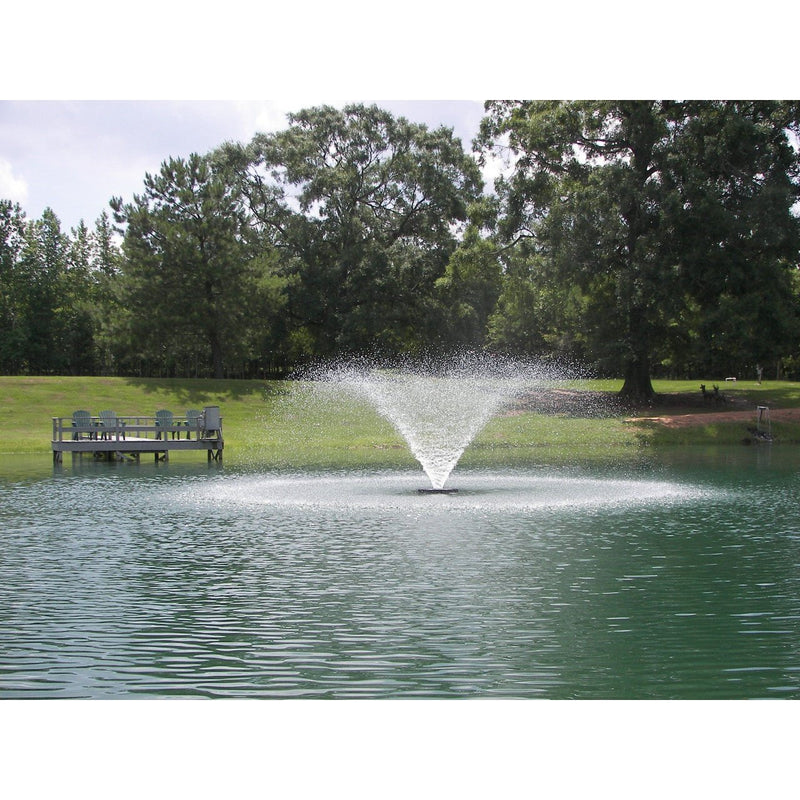
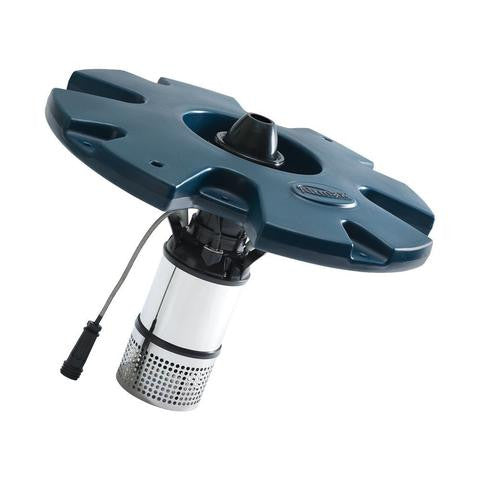
Many pond owners prioritize the "look" of the water over the "physics" of the water. This leads to the most common mistake: installing a high-horsepower surface fountain in a deep pond. Fountains are notoriously inefficient for deep-water aeration because they only pull water from the top 4 to 6 feet. The bottom of the pond remains stagnant and low in oxygen, despite the high electricity cost of the fountain.
Another frequent error is the use of "Power Hogs"—oversized compressors intended to compensate for poor diffuser placement. If a single diffuser is placed in a corner, it cannot circulate the entire water body. Owners often try to fix this by buying a larger pump, which simply creates a more violent (and expensive) boil in that one corner. The correct solution is a smaller pump connected to a manifold with multiple, strategically placed diffusers.
Friction loss is the third major challenge. Using 3/8-inch tubing for a 500-foot run creates immense backpressure. The compressor has to fight the air-hose resistance before it even reaches the water. Upgrading to 1/2-inch or 5/8-inch "weighted" airline can reduce the load on the motor, lowering the amperage draw and extending the life of the compressor.
Limitations of Energy-Efficient Systems
While linear diaphragm pumps are the "gold standard" for energy efficiency, they have hard physical limits. Most linear pumps cannot operate effectively at depths exceeding 8 to 10 feet. If they are forced to push air deeper, the internal diaphragms will rupture within weeks due to the excessive backpressure.
Environmental factors also play a role. In high-altitude regions, the air is less dense, which changes the performance curves of compressors. A pump that works perfectly at sea level may underperform at 6,000 feet, requiring a slightly larger motor and, consequently, more electricity. Similarly, in extremely hot climates, compressors require robust cooling fans. These auxiliary fans add a small but measurable amount to the total wattage of the system.
The Power Hog vs. The Strategic Sizer
The following table compares a traditional 1 HP surface fountain (The Power Hog) against a high-efficiency 1/4 HP diffused aeration system (The Strategic Sizer) for a 1-acre pond with a maximum depth of 12 feet.
| Feature | The Power Hog (1 HP Fountain) | The Strategic Sizer (1/4 HP Diffused) |
|---|---|---|
| Wattage Draw | ~1,150 Watts | ~240 Watts |
| Monthly Cost (@ $0.15/kWh) | ~$124.20 | ~$25.92 |
| Annual Operating Cost | ~$1,490.40 | ~$311.04 |
| Aeration Depth | Top 4–6 Feet Only | Full 12-Foot Column |
| Primary Benefit | Aesthetic Spray Pattern | Biological Health & Destratification |
This comparison illustrates that the "Strategic Sizer" saves nearly $1,200 annually while providing superior oxygenation for the entire pond volume. The ROI on switching to a more efficient motor type is often less than 12 months.
Practical Tips for Reducing Electricity Costs
To optimize your current system or plan a new one, follow these best practices to ensure every watt is utilized effectively.
- Use a Timer: If your pond is not heavily stocked, you may not need 24/7 aeration during the winter. Using a heavy-duty timer to run the system for 12 hours a day can cut costs in half during low-demand months. However, never do this in the summer when oxygen demand is at its peak.
- Check Your Manifold: If you are running multiple diffusers, ensure the air is balanced. An unbalanced manifold forces the compressor to work harder to push air to the "path of most resistance."
- Upgrade Your Diffusers: Old, clogged rubber diffusers increase backpressure. Switching to high-efficiency EPDM membrane diffusers or ceramic stones can lower the required PSI, reducing the motor's workload.
- Clean the Air Filter: A dirty intake filter acts like a choke. The motor has to work harder to pull air in, which increases heat and power draw. Replace or clean filters every 3 to 6 months.
- Positioning: Place the compressor in a shaded, well-ventilated area. Cooler air is denser and easier to compress, plus it helps the motor dissipate heat more efficiently.
Advanced Considerations: Variable Frequency Drives (VFDs)
For very large lake systems or industrial applications, Variable Frequency Drives (VFDs) represent the pinnacle of energy management. A VFD allows the operator to adjust the speed of the motor to match the real-time oxygen demand of the water.
In the early morning, when plants have consumed oxygen overnight, the VFD can ramp up the compressor to 100% speed. During the afternoon, when photosynthesis is producing natural oxygen, the drive can slow the motor down to 60%. Because the relationship between motor speed and power consumption is non-linear, a 20% reduction in speed can result in nearly a 50% reduction in power usage. While the initial investment in a VFD system is higher, the long-term data shows it is the most effective way to manage multi-horsepower installations.
Example Scenario: A 1/2 Acre Farm Pond
Let's look at a typical scenario for a 1/2 acre pond with an average depth of 8 feet and a maximum depth of 10 feet.
The owner is currently using a 1/2 HP centrifugal pump to run a small waterfall and provide aeration. This pump draws 4.5 amps at 115V.
Current Cost Calculation: 4.5A × 115V = 517.5 Watts. Running 24/7 at $0.15/kWh = $1.86 per day, or **$55.80 per month**.
By switching to a 60W linear diaphragm pump (like a Hiblow HP-80) and a bottom diffuser, the owner can achieve better oxygenation.
New Cost Calculation: 60 Watts. Running 24/7 at $0.15/kWh = $0.21 per day, or **$6.30 per month**.
The owner saves **$49.50 per month**. The new aeration system, costing approximately $450.00, pays for itself in just over 9 months. Furthermore, the linear pump is nearly silent, improving the environment for both the owner and the fish.
Final Thoughts
Optimizing pond aeration is an exercise in engineering rather than aesthetics. By focusing on the motor's efficiency metrics—such as CFM per watt and the ability to handle specific hydrostatic pressures—you can maintain a healthy aquatic ecosystem without excessive electrical overhead. The "Strategic Sizer" approach consistently outperforms "Power Hog" systems in both biological results and financial sustainability.
The key to success lies in matching the compressor technology to the specific depth of your pond. Shallow ponds benefit most from the low wattage of linear diaphragm pumps, while deep-water environments require the pressure capabilities of rocking piston compressors. Avoiding decorative fountains for primary aeration remains the most effective way to slash monthly utility costs.
As electricity rates continue to fluctuate, the importance of mechanical efficiency will only grow. We encourage pond owners to audit their current equipment, check for friction losses in their airlines, and consider the long-term ROI of modern, high-efficiency motor technology. Application of these principles ensures your pond remains a clear, vibrant asset rather than a drain on your finances.