

How Heavy Rain Changes Pond Water Chemistry Overnight
A storm just dumped acid rain into your pond. What now?
Heavy rain isn't just water—it's a chemistry disruptor that can tank your pH and strip oxygen. Learn why your aerator is your best friend during a downpour and how to avoid the 'Chemical Spiral' of expensive fixes.
Managing a pond ecosystem requires a technical understanding of how external environmental inputs alter internal chemical balances. When significant precipitation events occur, the influx of water is rarely "pure." Instead, it introduces a suite of variables including atmospheric gases, particulate matter, and localized pollutants that can rapidly shift the baseline parameters of your water column. This article examines the mechanical and chemical strategies necessary to stabilize a pond during and after heavy rainfall.
Effective pond management moves beyond aesthetic maintenance into the realm of hydrological engineering. By prioritizing mechanical aeration and understanding the buffering capacity of your water, you can prevent the catastrophic biological crashes often associated with "turnover" or "acid shock." We will break down the data behind these shifts and provide a blueprint for maintaining a stable aquatic environment under stress.
How Heavy Rain Changes Pond Water Chemistry Overnight
Rainwater is naturally acidic, typically possessing a pH between 5.0 and 5.6 due to the absorption of atmospheric carbon dioxide (CO2), which forms weak carbonic acid. In industrial or high-traffic regions, the presence of sulfur dioxide and nitrogen oxides can lower this pH further, resulting in "acid rain." When a large volume of this low-pH water enters a pond, it directly challenges the system's alkalinity, or its ability to neutralize acids.
The primary mechanism of change is the dilution of carbonates and bicarbonates. These minerals act as a buffer, keeping the pH stable. If a pond has low total alkalinity (measured in mg/L of CaCO3), a heavy downpour can exhaust the available buffers, causing the pH to plummet. This rapid shift is often more lethal to aquatic life than the absolute pH value itself, as it disrupts the osmoregulatory functions of fish and beneficial bacteria.
Beyond pH, heavy rain impacts Dissolved Oxygen (DO) levels through several pathways. First, the drop in atmospheric pressure that precedes a storm reduces the "partial pressure" of oxygen, making it harder for O2 to dissolve into the water surface. Second, runoff often carries organic debris, silt, and fertilizers into the pond. This influx increases the Biochemical Oxygen Demand (BOD), as bacteria consume oxygen at an accelerated rate to decompose the new organic load. In many cases, the combination of low pH and high BOD creates an anaerobic environment that can lead to a total system collapse within hours.
The Mechanics of Gas Exchange and Aeration Stability
The most effective tool for counteracting rain-induced chemistry shifts is a high-efficiency aeration system. Aeration functions on the principle of gas exchange at the air-water interface. By increasing the surface area of the water exposed to the atmosphere—either through surface splashing or bottom-diffused bubbles—you facilitate the movement of gases into and out of the pond.
During a heavy rain event, your pond accumulates excess dissolved carbon dioxide (CO2). This CO2 accumulation is a primary driver of acidification. A mechanical aerator works to "strip" CO2 from the water. As bubbles rise through the water column, they carry CO2 to the surface where it is released into the atmosphere. This process naturally aids in stabilizing the pH, as reducing the concentration of carbonic acid allows the pond’s existing alkalinity to work more effectively.
Furthermore, aeration maintains the Standard Oxygen Transfer Rate (SOTR). By circulating the water, the system ensures that oxygen-depleted water from the bottom (the benthic zone) is brought to the surface to be re-oxygenated. This prevents thermal stratification, where a layer of cold, oxygen-poor water is trapped at the bottom. Without aeration, a heavy, cold rain can cause these layers to flip suddenly—a phenomenon known as "pond turnover"—which can instantly strip the entire water column of oxygen.
Mechanical Optimization of Diffused Aeration
Subsurface aeration systems, utilizing rocking piston compressors or linear diaphragm pumps, are superior for deep-water gas exchange. These systems pump compressed air through weighted tubing to diffusers located at the deepest point of the pond. The efficiency of these systems is measured by the "rise rate" and the size of the micro-bubbles produced. Smaller bubbles have a higher surface-area-to-volume ratio, which maximizes the oxygen transfer efficiency (SOTE).
When rain introduces silt and particulates, the viscosity of the water can change slightly, and the organic load increases. A properly sized diffuser ensures that the entire volume of the pond is turned over at least once or twice every 24 hours. This constant movement prevents the "dead zones" where anaerobic bacteria produce toxic hydrogen sulfide gas, which can be agitated and released during a storm if the water is not kept in motion.
Benefits of Mechanical Stabilization Over Chemical Intervention
Choosing mechanical aeration and structural buffering over reactive chemical treatments offers several measurable advantages in terms of efficiency and long-term pond health. Relying on "quick fix" chemicals like liquid pH adjusters often leads to the 'Chemical Spiral,' where one treatment necessitates another to correct the resulting imbalance.
Predictable pH Stability: Mechanical aeration provides a steady-state environment. By continuously stripping CO2, the system prevents the wild pH swings that occur between day (photosynthesis consuming CO2) and night (respiration producing CO2). This stability is critical during rain events when the natural cycle is already under stress.
Cost Efficiency: While the initial investment in a high-quality compressor and EPDM (Ethylene Propylene Diene Monomer) membrane diffusers is higher, the operational cost is significantly lower than repeated applications of chemical clarifiers or oxygen tablets. A linear compressor may draw only 60 to 100 watts of power, providing 24/7 protection for a fraction of the cost of emergency chemical remediation.
Reduced Nutrient Loading: Aeration promotes the growth of aerobic "good" bacteria. These microbes are far more efficient at breaking down the nitrogen and phosphorus carried in by rainwater runoff than their anaerobic counterparts. By maintaining high DO levels, you ensure that these nutrients are processed biologically rather than fueling an algae bloom once the sun returns after the storm.
Challenges and Common Pitfalls in Post-Rain Management
One of the most frequent mistakes made by pond owners is the immediate application of algaecides or clarifiers after a heavy rain. If the rain has already lowered the pH and stressed the fish, adding a copper-based algaecide can be fatal. Copper is significantly more toxic to aquatic life in soft, acidic water. Without first testing the alkalinity and pH, chemical applications can unintentionally "nuke" the pond’s biological filter.
Another challenge is "Siltation and Turbidity." Heavy rain carries suspended solids into the pond. While it is tempting to use a flocculant (like aluminum sulfate) to clear the water immediately, this can further drop the pH. The mechanical challenge here is that silt can settle on the surface of aeration diffusers, reducing their efficiency. In ponds with high clay runoff, diffusers may require more frequent cleaning or "burping" (bursting high-pressure air through them) to maintain flow rates.
Failure to account for "Thermal Shock" is a third pitfall. In the summer, a sudden influx of cold rainwater can settle at the bottom of a warm pond. If the pond is not aerated, this creates a sharp thermocline. When the wind picks up or the rain continues, these layers can mix rapidly, causing the "turnover" mentioned previously. The result is a sudden drop in temperature and oxygen, which can cause mass mortality in sensitive species like trout or koi.
Limitations of Aeration Systems
While aeration is a critical tool, it is not a panacea for all rain-related issues. Understanding the physical boundaries of these systems is necessary for realistic pond management. Aeration cannot "add" alkalinity to a pond; it can only help preserve what is there by managing CO2. If your source water or the rain itself has stripped the water of minerals, you must still physically add buffering agents like crushed limestone or sodium bicarbonate.
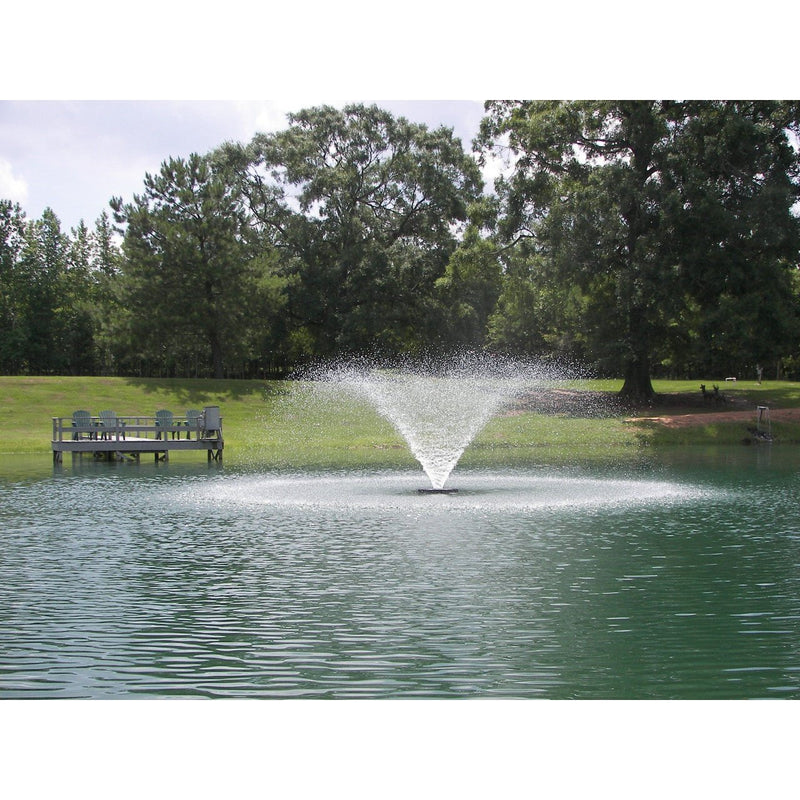
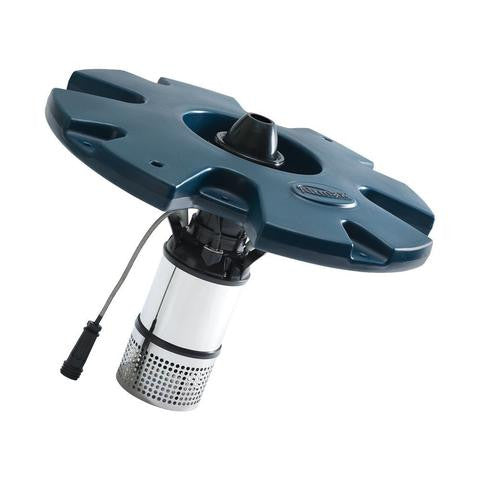
Environmental constraints also play a role. In extremely shallow ponds (less than 4 feet deep), bottom-diffused aeration is less effective because the bubbles do not have enough "hang time" in the water column to facilitate maximum gas exchange. In these scenarios, a surface aerator or "fountain" may be required to physically agitate the surface, though these are less efficient at circulating the deep cold-water layers.
Furthermore, in the event of a catastrophic chemical spill or massive agricultural runoff (e.g., a nearby manure pit overflowing into the pond), aeration will not be able to keep up with the oxygen demand. In these "high-load" scenarios, the rate of oxygen consumption by decomposing organic matter can exceed the maximum oxygen transfer rate of any standard aeration system.
Comparison: Active Aeration vs. Chemical Buffering
When managing the effects of rain, practitioners often weigh the benefits of mechanical aeration against chemical buffering. The following table compares these two approaches based on technical metrics.
| Feature | Mechanical Aeration | Chemical Buffering (Lime/Bicarbonate) |
|---|---|---|
| Primary Function | Gas exchange (O2 in, CO2 out) | Increasing Carbonate Hardness (KH) |
| Impact on pH | Stabilizes by stripping carbonic acid | Directly raises and locks pH levels |
| Operating Cost | Low (electricity/maintenance) | Moderate to High (recurring material cost) |
| Response Time | Continuous/Immediate gas shift | Delayed (requires dissolution time) |
| Labor Intensity | Low (automated) | High (manual application/testing) |
| Risk Factor | Negligible | High (overdosing can cause pH spikes) |
The optimal strategy involves a baseline of **Mechanical Aeration** supported by periodic **Chemical Buffering** only when testing indicates that total alkalinity has dropped below 50-100 mg/L.
Practical Tips for Storm Readiness
To ensure your pond survives a heavy rain event, implement these technical best practices:
- Install a Pre-Filter or Silt Trap: If your pond receives runoff from a specific hillside or pipe, construct a small "settling basin" or use gravel berms to catch heavy sediment before it enters the main water body.
- Check Compressor Diaphragms: Before the storm season, inspect your aeration compressor. A worn diaphragm will significantly reduce CFM (Cubic Feet per Minute) output, leaving you with insufficient oxygen transfer when the BOD spikes.
- Monitor Alkalinity Monthly: Use a titration-based test kit to measure KH. Aim for at least 100 ppm (parts per million). If you are below this, add agricultural lime (calcium carbonate) to the pond edges before the rain hits.
- Diversify Diffuser Placement: Instead of one large diffuser, use multiple smaller diffusers spread across the pond floor. This ensures no "dead pockets" of water are left to become anaerobic.
- Automatic Power Backup: Storms often cause power outages. A battery backup or a solar-powered auxiliary aerator can be a life-saver for high-density fish ponds.
Advanced Considerations: Calculating Oxygen Demand
For the serious practitioner, calculating the "Oxygen Transfer Requirement" (OTR) can help in sizing equipment correctly. The OTR is influenced by the "Alpha Factor," which accounts for the difference between oxygen transfer in clean water versus pond water containing dissolved solids and organics.
When rain enters the pond, the Alpha Factor typically drops. This means your aerator becomes less efficient at the very moment you need it most. To compensate, it is advisable to "over-spec" your aeration system by 20-30% above the standard requirements for your pond's volume. This provides a safety margin for "Shock Loading" events—situations where a sudden influx of organic matter or a temperature spike occurs simultaneously with a rain event.
Another advanced metric is the "Friction Loss" in your air lines. If you are running long distances from a compressor to the pond, ensure you are using 1/2-inch or 5/8-inch weighted tubing to minimize pressure drop. A compressor working against too much back-pressure will run hot, shortening its lifespan and delivering less air to the diffusers.
Example Scenario: The 1-Acre Pond "Acid Shock"
Consider a 1-acre pond with an average depth of 6 feet (approximately 2 million gallons of water). The pond has a low baseline alkalinity of 30 mg/L. A severe thunderstorm delivers 3 inches of rain with a pH of 4.2 over six hours.
Without aeration, this volume of acidic water sits on the surface, creating a "wedge" of low-pH, low-oxygen water. As the rain cools the surface, this wedge begins to sink. Within 12 hours, the entire pond's pH drops from 7.5 to 6.2. The fish, already stressed by the rapid change, begin to gasp at the surface as the CO2 levels in the water rise to 20+ mg/L, inhibiting their ability to take up oxygen.
In contrast, an identical pond equipped with a 1/4 HP rocking piston compressor and two dual-membrane diffusers fares differently. As the rain falls, the diffusers maintain a constant "boil" at the surface. The CO2 being introduced by the rain is immediately stripped out. The vertical circulation ensures the acidic rainwater is mixed with the entire volume of buffered pond water, diluting the impact. The pH only drops to 7.1, a manageable shift for the aquatic life. The BOD increase from the runoff is handled by the high concentrations of aerobic bacteria maintained by the constant 8.0 mg/L Dissolved Oxygen levels.
Final Thoughts
Maintaining a pond through heavy rain is an exercise in managing gas exchange and mineral buffers. By understanding that "acid rain" is essentially a CO2 and pH challenge, you can shift your focus from reactive chemical treatments to proactive mechanical stability. Your aerator is not just a bubble machine; it is the primary engine for chemical regulation within your pond's ecosystem.
Investing in high-quality mechanical components—such as efficient compressors and fine-pore diffusers—provides a robust defense against the unpredictable nature of precipitation. When combined with regular monitoring of alkalinity and pH, these systems create a resilient environment capable of absorbing environmental shocks without collapsing.
As you move forward, consider the specific hydrology of your site. Evaluate your runoff patterns and your equipment's "Standard Oxygen Transfer Efficiency." By applying these technical principles, you ensure that your pond remains a stable, thriving ecosystem, regardless of the weather. Experiment with diffuser placement and monitor your data points; the more you understand the mechanics of your water, the less you will rely on the "Chemical Spiral" of expensive fixes.