

Growing Natural Fish Food With Aeration
If you stop buying bags of feed, do your fish starve or do they feast? Stop being a customer of the feed store. Most pond owners don't realize that oxygen is the 'fuel' for the food chain. High-oxygen aeration cycles nutrients to create a massive explosion of natural forage—zooplankton, scuds, and larvae. Let your pond feed itself.
Oxygen serves as the primary catalyst for every biological process within a pond environment. When dissolved oxygen (DO) levels remain consistently high, the ecosystem transitions from a stagnant, nutrient-trapping basin into a highly efficient food-producing machine. This shift relies on the fundamental principles of aerobic decomposition and nutrient sequestration.
Aquatic ecosystems are often limited by the rate at which organic matter—leaves, fish waste, and dead algae—is processed. In a typical low-oxygen environment, this material accumulates as "muck," locking away energy that could otherwise be used to grow fish. Aeration unlocks this energy by providing the necessary environment for aerobic bacteria to thrive, which decompose organic matter much faster and more completely than their anaerobic counterparts.
Growing Natural Fish Food With Aeration
Growing natural fish food with aeration is the process of using mechanical systems to maintain high dissolved oxygen levels throughout the water column to stimulate the production of the forage base. This approach focuses on the bottom-up stimulation of the food web, starting with microscopic organisms and moving up to macroinvertebrates.
In a healthy pond, the food chain begins with phytoplankton and zooplankton. Dissolved oxygen levels play a critical role in the survival and reproductive rates of these organisms. Research indicates that zooplankton abundance is significantly higher in aerated ponds compared to non-aerated ones. For instance, studies have shown aerated systems maintaining DO levels around 7.23 mg/L see a marked increase in zooplankton density compared to non-aerated systems where DO might drop to 2.33 mg/L.
Aeration acts as an engine for the ecosystem. It provides the habitat requirements for sensitive species like Daphnia and Gammarus (scuds), which are the "steak" of the aquatic world for small and growing fish. Without sufficient oxygen, these high-energy food sources cannot survive, leaving your fish dependent on expensive, processed pellets.
How the Aerobic Food Machine Works
The mechanism behind natural food production is driven by the movement of nutrients from the sediment back into the living biomass. This process, often called nutrient cycling, is governed by the presence of oxygen at the sediment-water interface.
Aerobic bacteria are the primary decomposers in an oxygen-rich environment. They break down organic carbon into carbon dioxide (CO2) rather than the toxic methane (CH4) or hydrogen sulfide (H2S) produced in anaerobic conditions. This rapid decomposition prevents the accumulation of muck and releases essential nutrients like nitrogen and phosphorus in forms that support healthy algae growth—the foundation of the food chain.
Nitrogen cycling is particularly dependent on oxygen. Nitrifying bacteria require a minimum of 1.0 to 2.0 mg/L of dissolved oxygen to convert toxic ammonia into nitrate. Nitrate then serves as a fertilizer for beneficial phytoplankton, which are subsequently consumed by zooplankton. If DO levels fall, this cycle breaks, ammonia builds up, and the production of natural forage stalls.
Phosphorus management is another technical benefit of aeration. In oxygenated water, phosphorus tends to bind with iron in the sediment, making it less available for harmful blue-green algae blooms while keeping it accessible for the benthic (bottom-dwelling) organisms that form the forage base.
Benefits of Oxygen-Driven Forage Production
The transition to an oxygen-driven food system offers measurable advantages in both fish growth rates and system stability. High-oxygen environments allow for a significantly higher carrying capacity, meaning the pond can support more pounds of fish per acre without the risk of a "crash."
One of the most practical benefits is the expansion of usable habitat. In stratified, non-aerated ponds, the bottom several feet of water often become anoxic (devoid of oxygen) during summer. This "dead zone" is off-limits to fish and the invertebrates they eat. Aeration eliminates this stratification, opening up the entire volume of the pond for food production and fish occupancy.
Cost efficiency is a major factor. While aeration systems require an initial investment and modest electricity costs, they reduce or eliminate the need for supplemental feeding. Commercial fish production data shows that aeration can increase tilapia production from approximately 6,490 kg/ha to over 9,500 kg/ha simply by maintaining optimal environmental conditions.
The reduction in maintenance is also notable. Aerated ponds process organic "waste" so efficiently that the need for chemical treatments to manage algae or muck is drastically reduced. The system essentially cleans itself while simultaneously producing food.
Challenges and Common Technical Mistakes
A common error in pond management is under-sizing the aeration system. If the oxygen demand of the pond (Biochemical Oxygen Demand or BOD) exceeds the Standard Oxygen Transfer Rate (SOTR) of the equipment, the system will fail to maintain aerobic conditions at the bottom.
Incorrect placement of diffusers is another frequent pitfall. Diffusers must be placed in the deepest parts of the pond to ensure total water column mixing. If they are placed too shallow, they may fail to break the thermocline, leaving a layer of toxic, deoxygenated water at the bottom. This can lead to a "turnover" event where the pond suddenly mixes, potentially causing a mass fish kill.
Operating the system intermittently is often a mistake in high-biomass ponds. While some owners run aeration only during the day, the highest oxygen demand occurs at night when photosynthesis stops and plants begin to consume oxygen. Continuous operation is generally the most effective strategy for maximizing the forage base.
Limitations and Environmental Constraints
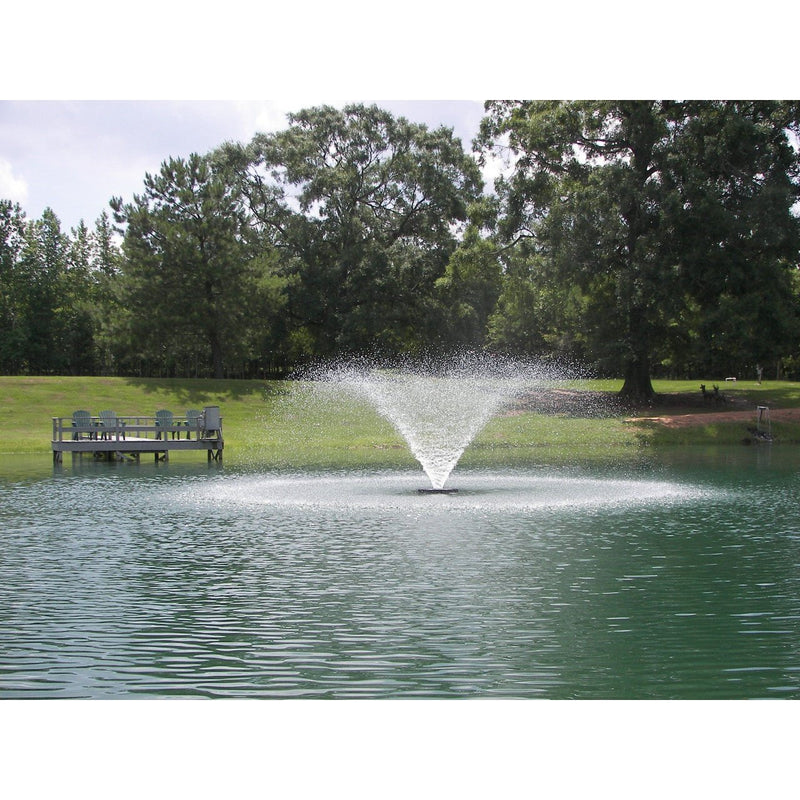
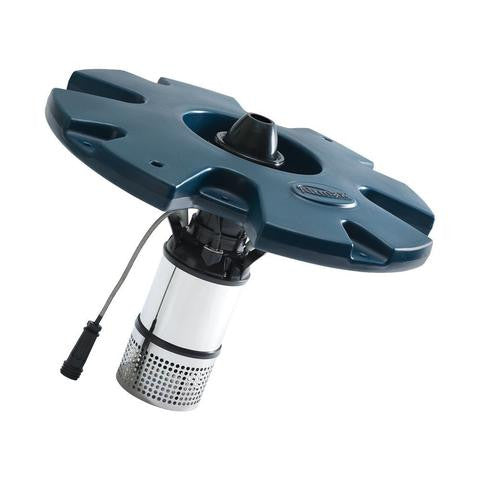
Aeration is not a universal fix for every pond. In very shallow ponds (less than 5-6 feet), diffused aeration is less efficient. The bubbles have less "rise time," which reduces the Standard Oxygen Transfer Efficiency (SOTE). In these cases, surface aerators or fountains may be more effective at introducing oxygen.
Very large lakes may find the cost of full-lake aeration prohibitive. In these scenarios, "targeted aeration" or "emergency aeration" is used to protect specific high-value areas, though this does not provide the same food-production benefits as a total-system approach.
High levels of existing chemical toxicity can also limit the effectiveness of aeration. If a pond has a massive legacy load of heavy metals or persistent pesticides in the sediment, aeration may temporarily increase the bioavailability of these substances as the muck is processed. A baseline sediment test is recommended for older industrial or agricultural ponds.
Technical Comparison: Aeration Methods
The choice of equipment directly impacts the efficiency of oxygen transfer and, consequently, the rate of food production. The following table compares the two primary methods based on Standard Aeration Efficiency (SAE) metrics.
| Feature | Diffused (Fine Bubble) | Surface (Splasher/Paddle) |
|---|---|---|
| SAE (kg O2/kWh) | 2.0 – 8.0 | 1.0 – 3.2 |
| Oxygen Transfer (lbs O2/hp-hr) | 2.0 – 4.0 | 1.0 – 2.0 |
| Mixing Capability | High (Full Column) | Low (Surface Only) |
| Efficiency in Deep Water | Excellent | Poor |
| Initial Capital Cost | Moderate to High | Lower |
Diffused aeration is generally superior for food production because it mixes the entire water column and oxygenates the benthos, where macroinvertebrates like scuds live. Surface aerators are better suited for emergency situations or very shallow ponds where they can vent harmful gases more effectively.
Practical Tips for Optimizing Forage Production
To maximize the production of natural food, the aeration system must be tuned to the specific needs of the local biology. Gammarus (scuds) and Daphnia (zooplankton) have specific dissolved oxygen requirements that must be met.
- Maintain DO levels between 6.0 and 8.0 mg/L for optimal scud growth. Survival becomes stressed below 3.5 mg/L.
- Use fine-bubble diffusers. Smaller bubbles have a larger surface-area-to-volume ratio, which dramatically increases the oxygen transfer rate.
- Monitor the "boil" on the surface. A strong, steady current indicates that the system is effectively lifting bottom water to the surface for gas exchange.
- Combine aeration with structure. Placing rock piles or brush near the diffusers provides a habitat for the scuds and larvae that thrive in the oxygen-rich current.
Checking the "Redox Potential" of the sediment can also provide deeper insights. A positive millivolt reading in the sediment indicates an oxidizing environment where muck is being actively converted into food.
Advanced Considerations for Serious Practitioners
For those looking to push the limits of their pond’s productivity, understanding the relationship between depth and SOTE is vital. The percentage of oxygen absorbed from a bubble increases as it travels through a longer water column. In a tank 1.0 meter deep, oxygen absorption might be around 15%, but increasing that depth to 4.0 meters can raise the absorption to 40%.
Biological Oxygen Demand (BOD) must be calculated to size systems accurately. BOD represents the amount of oxygen required by bacteria to break down the organic matter present. A pond with heavy leaf fall or high fish density will have a much higher BOD and require a more robust compressor and more diffuser heads to maintain the "food producer" status.
Strategic destratification is the ultimate goal. By breaking the thermal layers, you create a uniform temperature and oxygen profile. This prevents "internal loading," where phosphorus is released from anaerobic sediments, fueling blue-green algae blooms instead of the beneficial green algae that zooplankton prefer.
Scenario: The 1-Acre Transition
Consider a typical 1-acre pond that is 12 feet deep. Without aeration, only the top 4–6 feet contain enough oxygen for fish and forage during the summer. The bottom 6 feet are a "wasteland" of muck and toxic gases. The owner spends $500 per year on fish feed.
By installing a 1/2 HP diffused aeration system, the owner oxygenates the entire 12-foot column. This doubles the usable habitat. The aerobic bacteria begin processing the 12 inches of muck on the bottom. Within one season, the population of Gammarus scuds increases from nearly zero to over 1,000 individuals per square meter in the newly oxygenated deep zones.
The fish now have access to a constant, 24-hour buffet of high-protein natural forage. The owner reduces supplemental feeding by 80%, saving $400 annually. Within three years, the cost of the aeration system is fully recouped through feed savings and improved fish health.
Final Thoughts
Shifting from a feed-dependent pond to a food-producing ecosystem is a matter of mechanical and biological optimization. Oxygen is the fundamental fuel that powers this transition. By maintaining high dissolved oxygen levels, you provide the environment necessary for the rapid cycling of nutrients and the explosion of natural forage species.
A well-designed aeration system does more than just keep fish alive; it actively builds the forage base from the bottom up. This results in a more resilient, cost-effective, and productive aquatic environment. The focus moves away from external inputs and toward the internal efficiency of the pond’s own biological machinery.
Implementing these strategies requires a commitment to understanding the technical requirements of your specific water body. Whether you are managing a small recreational pond or a large-scale fishery, the principles of oxygen-driven production remain the same. Start thinking about oxygen as the most important "feed" you can provide.