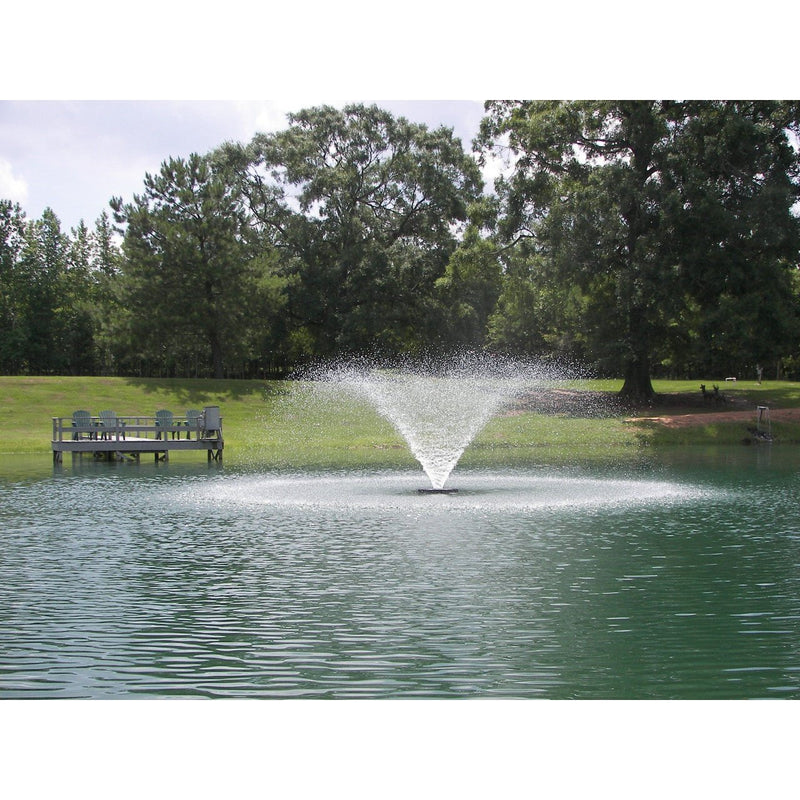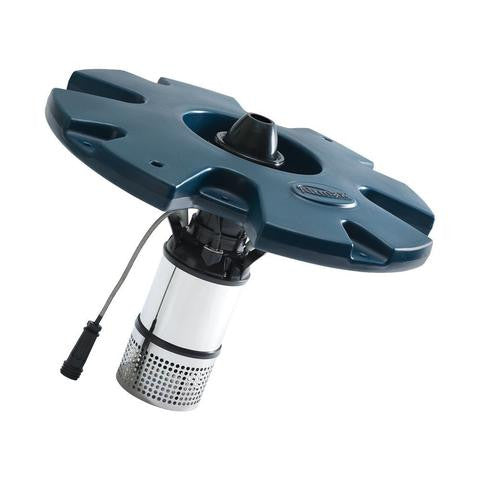


Evolution Of Dock Deicer Technology
Your grandfather's bubbler is the reason your dock is still shifting every February. Traditional air bubblers are inefficient and prone to clogging. The 'Now' of marina management is high-velocity water movement that can clear three times the area with half the maintenance.
Effective winter asset management requires a shift from passive aeration to active thermal entrainment. While a compressed air system relies on a slow rise of oxygen-heavy bubbles to displace surface water, a high-velocity deicer utilizes mechanical thrust to capitalize on the unique physical properties of water density. Specifically, fresh water reaches its maximum density at 4 degrees Celsius (39.2 degrees Fahrenheit). In a stratified winter environment, this warmer, denser water sinks to the benthos. Modern deicing systems are engineered to pull this thermal reservoir to the surface with enough kinetic energy to prevent the formation of a crystalline lattice, even when ambient air temperatures drop well below the freezing point.
Understanding the transition from VINTAGE BUBBLER technology to the modern SMART DEICER is essential for any marina operator or waterfront property owner who seeks to mitigate the risks of ice jacking, expansion crushing, and winter-related structural failure.
Evolution Of Dock Deicer Technology
Dock deicing technology originated as a byproduct of industrial wastewater aeration. Early systems utilized large, onshore compressors to force air through perforated pipes laid on the floor of a marina or around pilings. These "bubbler" curtains were designed to create a vertical current, bringing slightly warmer water from the bottom to the surface to prevent ice formation. While functionally successful in moderate climates, these pneumatic systems suffered from significant mechanical inefficiencies, including pressure drops over long hose runs and the inevitable clogging of air orifices by mineral deposits and biological growth.
As mechanical engineering advanced, the industry pivoted toward submersible motor units. These devices, often referred to as ice eaters or water thrusters, replaced the air compressor with a high-torque motor and a precision-engineered impeller. Instead of relying on the buoyancy of air to move water, these units create a direct hydraulic flow. This shift allowed for precise directional control and a much higher volume of water movement per kilowatt-hour of electricity consumed.
Today, the technology has reached a third stage of evolution: the smart deicer. These systems integrate variable frequency drives (VFDs), ambient temperature sensors, and remote telemetry. A modern system does not simply run 24/7; it modulates its output based on real-time water and air temperature data, providing a specialized application of thermal physics and fluid dynamics to maintain open water with surgical precision.
The Mechanics of Thermal Entrainment
The operational principle of a high-velocity deicer is rooted in the concept of thermal stratification. During the summer, lakes exhibit direct stratification where the warmest water (the epilimnion) sits on top. In winter, this flips into reverse stratification. As surface water cools toward 0 degrees Celsius, it becomes less dense and floats above the 4-degree Celsius water at the bottom (the hypolimnion).
A high-velocity deicer is positioned within or just above this 4-degree layer. The impeller creates a low-pressure zone that draws this dense, thermally superior water into the housing and ejects it toward the surface in a concentrated plume. This process, known as thermal entrainment, does two things:
- It physically disrupts the surface tension and prevents ice crystals from bonding.
- It introduces a constant supply of British Thermal Units (BTUs) to the surface, effectively melting existing ice and preventing new growth.
Unlike a bubbler, which creates a broad, weak upward current, a thruster creates a laminar flow that can be directed. By angling the unit, an operator can clear a long, narrow channel or a wide circular pool, depending on the specific geometry of the dock or vessel being protected.
Benefits of High-Velocity Water Movement
The primary advantage of high-velocity systems is the massive increase in area coverage per unit of energy. A standard 1/2 HP deicer can clear an area up to 50 feet in diameter, whereas a bubbler system with the same power draw might only keep a small 10-foot radius clear around individual pilings.
Maintenance requirements are also significantly reduced. Air bubblers are notorious for "salt-out" or calcium buildup in the tiny holes of the distribution tubing, which requires frequent hauling and acid cleaning. Submersible thrusters use a continuous-duty, water-cooled or oil-filled motor with a single moving part: the impeller. High-quality units are constructed from 300-series stainless steel and utilize sacrificial anodes to prevent galvanic corrosion, allowing them to stay submerged for several seasons without intervention.
Furthermore, directional control allows for the strategic management of ice floes. In a river or tidal environment, a deicer can be angled to push ice away from the dock, whereas a bubbler can only create a hole that may eventually be filled by drifting ice sheets.
Challenges and Common Mistakes
The most frequent error in deicer deployment is incorrect depth placement. If a unit is placed too close to the bottom, it will induce "silt-up," stirring up benthic sediments that can clog the intake and cause premature wear on the shaft seals. Conversely, placing the unit too close to the surface limits the amount of 4-degree water it can entrain, significantly reducing its melting capacity.
Another common pitfall is the neglect of sacrificial anodes. In brackish or salt water, the electrical potential between different metals in the unit can lead to rapid electrolysis. Without a properly maintained zinc or aluminum anode, the motor housing will eventually pit and fail, leading to water ingress and total motor burnout.
Finally, many operators fail to account for "ice jacking." This occurs when a small ring of ice forms around a piling, and the rising tide or changing water levels pull the piling upward. A deicer must be positioned to ensure the water directly against the piling remains liquid; simply having a hole nearby is insufficient to prevent the vertical force of ice expansion.
Limitations and Environmental Constraints
High-velocity deicers are not a universal solution for all environments. In extremely shallow water—less than four feet—there is often insufficient thermal mass at the bottom to provide effective melting. In these scenarios, a bubbler may actually be more effective as it relies more on surface agitation than thermal transfer.
Environmental regulations also play a role. Some jurisdictions limit the use of deicers because the open water they create can be a hazard to snowmobilers or ice fishermen. Additionally, the constant movement of water can disrupt the local "winter rest" of a lake, potentially affecting fish metabolism or promoting unseasonal algae growth if the water is heavily nutrient-loaded.
System reliability is also dependent on a stable power grid. Unlike an onshore compressor that can be easily backed up with a generator, a submerged fleet of deicers represents a significant electrical load that can be difficult to manage during winter storm outages.
Comparison: Air Bubblers vs. High-Velocity Thrusters
| Factor | Air Bubbler (Vintage) | High-Velocity Thruster (Modern) |
|---|---|---|
| Mechanism | Pneumatic displacement | Hydraulic entrainment |
| Area Cleared | Small, localized holes | Large, adjustable zones |
| Efficiency | Low (Pressure loss in lines) | High (Direct energy transfer) |
| Maintenance | High (Clogging, line leaks) | Low (Sealed motors, anodes) |
| Shallow Water | Effective | Limited effectiveness |
Practical Best Practices for Installation
To maximize the efficiency of a high-velocity system, the units should be installed using a rigid mount or a weighted sling that prevents the unit from spinning or changing angle due to its own torque.
The use of a thermostat is non-negotiable for energy efficiency. A line-voltage thermostat set to 35 degrees Fahrenheit ensures the system only consumes power when freezing is imminent. For larger marinas, staggered start-up timers are essential to prevent a massive amperage spike that could trip the main breakers when the temperature drops.
If protecting a boat in a slip, the deicer should be positioned at the bow, angled toward the stern. This allows the plume to flow along the hull, utilizing the boat's own shape to direct the warm water and maintain a clear perimeter.
Advanced Considerations: Smart Controls and VFDs
The leading edge of deicing technology involves the integration of Variable Frequency Drives (VFDs). A VFD allows the motor to ramp up its RPM slowly, reducing mechanical stress on the seals and bearings. More importantly, it allows the system to run at a lower speed during moderate cold and only hit 100% capacity during extreme "polar vortex" events.
Smart controllers now offer IoT connectivity, allowing marina managers to monitor the status of every deicer from a smartphone. These systems can send alerts if a unit stops drawing current (indicating a fouled prop or motor failure) or if the water temperature at the intake rises above a certain threshold, suggesting the unit is recycling its own surface water rather than pulling from the deep.
This level of data-driven management allows for predictive icing models. By correlating wind direction, air temperature, and barometric pressure, a smart system can proactively clear an area before the first ice crystals even form, saving energy and reducing structural stress.
Scenario: Marina Transition from Bubblers to High-Velocity
Consider a 100-slip marina in the Great Lakes region that currently utilizes a 10 HP central compressor system to run bubbler lines. The system consumes roughly 7.5 kW per hour. Despite this, the marina experiences an average of 5% piling displacement every winter due to "ice grabbing" and uneven melting.
By replacing the central compressor with twenty 1/2 HP high-velocity deicers equipped with thermostats and smart controllers, the marina can achieve far superior results. While the total potential horsepower remains the same, the actual run-time is reduced by 40% due to the efficiency of thermal entrainment. The ability to direct the flow ensures that the high-stress areas at the ends of the piers are completely ice-free, reducing the annual repair budget by an estimated $12,000.
In this scenario, the capital expenditure of the new units is typically recovered within three seasons through energy savings and reduced maintenance labor.
Final Thoughts
The transition from traditional air-based deicing to high-velocity water movement represents a necessary maturation in marine infrastructure management. By understanding and utilizing the thermal density of water, operators can provide a much higher level of protection for docks, pilings, and vessels with a significantly smaller electrical footprint.
Success in winter deicing is not about the brute force of an air compressor; it is about the precision of a well-placed impeller and the intelligent application of thermal physics. As smart controls and energy-efficient motor designs continue to evolve, the ability to maintain open water in the harshest conditions will become more automated, more reliable, and more cost-effective.
Property owners and marina managers who embrace these high-velocity systems will find that their winter seasons are defined by structural stability rather than the constant anxiety of shifting pilings and ice-crushed slips.