

Does Snow Cover Reduce Oxygen in Winter Ponds?
Snow on ice is a 'blackout curtain' for your pond. Without light, plants die and oxygen disappears. It’s not the cold that kills your fish—it’s the lack of light and air. A simple aerator prevents winter kill by keeping one small window open.
The transition from late autumn to deep winter initiates a critical shift in pond limnology. While the surface may appear static, the sub-surface environment remains a site of continuous biochemical activity. The primary threat to aquatic life during this period is not the decline in temperature, but the physical isolation of the water column from atmospheric interaction. This isolation, facilitated by ice and exacerbated by snow, creates a closed system where oxygen consumption eventually exceeds available supply. Modern gas exchange techniques, specifically diffused aeration, serve as a mechanical vent to circumvent this natural bottleneck.
Does Snow Cover Reduce Oxygen in Winter Ponds?
Snow cover is the primary driver of rapid dissolved oxygen (DO) depletion in frozen ponds. While clear ice allows for the transmission of photosynthetically active radiation (PAR), snow acts as a highly efficient light-blocking medium. Technical measurements indicate that even a thin layer of four inches of accumulated snow can attenuate up to 99% of incoming solar energy. This reduction in light halts the photosynthetic activity of submerged macrophytes and phytoplankton, which are responsible for generating 70% to 90% of a pond’s oxygen during the growing season.
When photosynthesis ceases, the pond enters a state of net oxygen deficit. The internal DO reservoir is finite, and the biological oxygen demand (BOD) remains active. Bacteria continue to decompose organic matter on the pond floor, and fish, though their metabolic rates are reduced, continue to respire. The ice layer functions as a physical barrier that prevents atmospheric oxygen from diffusing into the water. This combination—zero production and zero atmospheric intake—leads to a steady decline in DO levels, often falling below the 5 ppm threshold required for fish health, eventually reaching lethal anoxic conditions.
The Mechanics of Sub-Ice Gas Exchange
The maintenance of dissolved oxygen in a frozen pond relies on the preservation of a liquid-atmosphere interface. In an undisturbed, frozen pond, the water column is functionally sealed. Gases produced by the decomposition of organic muck—such as carbon dioxide, methane, and hydrogen sulfide—become trapped under the ice. These gases not only displace oxygen but can reach concentrations that are toxic to aquatic organisms.
Diffused aeration systems operate by injecting compressed air into the water through a diffuser located on or near the pond floor. As the bubbles rise, they create a vertical current known as an air lift. This current brings warmer, denser water (typically 39°F or 4°C) from the lower depths to the surface. The thermal energy from this water melts the ice, creating a "vent" or "window." This opening facilitates two critical processes:
- Gas Venting: Volatile toxic gases (CO2, H2S, CH4) are allowed to escape into the atmosphere.
- Oxygen Diffusion: Atmospheric oxygen dissolves into the water at the surface interface, aided by the turbulence created by the rising bubbles.
The efficiency of this process is governed by the Standard Oxygen Transfer Rate (SOTR). In winter, the goal is not necessarily to saturate the entire water column but to maintain a minimum oxygenated zone and prevent the accumulation of lethal gas concentrations.
Advantages of Diffused Aeration in Cold Climates
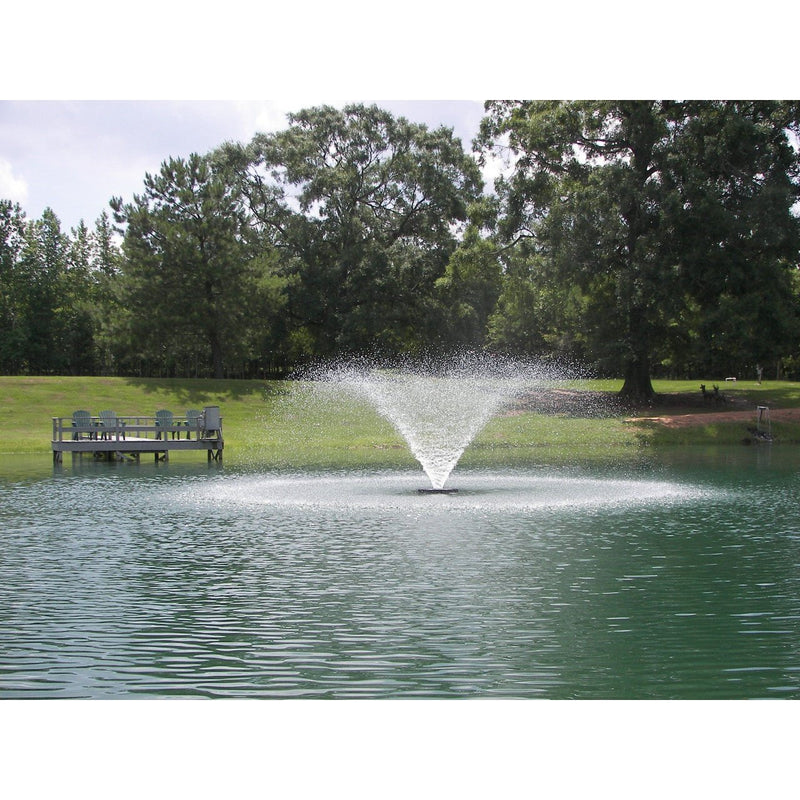
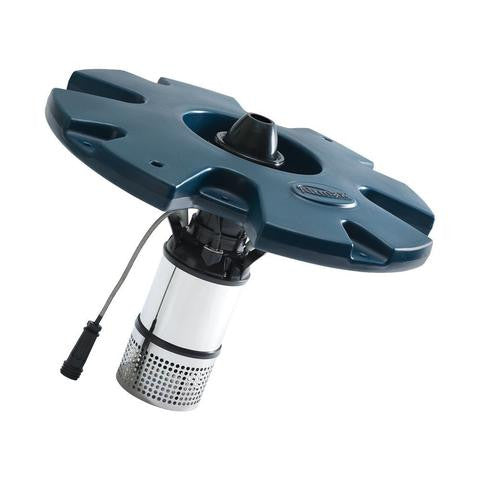
Mechanical aeration provides a controlled method for managing pond gases when natural processes fail. The primary advantage of sub-surface diffused aeration over surface-based methods is its reliance on thermodynamic efficiency rather than mechanical splashing.
High Oxygen Transfer Efficiency (OTE): Fine-bubble diffusers produce a larger surface-area-to-volume ratio compared to coarse bubbles. This increases the time and contact area for oxygen to dissolve as the bubbles transit the water column. In depths of 8 to 10 feet, fine-bubble systems can achieve an OTE of approximately 6.9% per meter of depth.
Thermal Preservation: Unlike surface fountains that spray water into the frigid air—causing rapid heat loss—diffused aeration keeps the mechanical components submerged or sheltered. This reduces the risk of equipment freeze-up and minimizes the "supercooling" of the water column.
Energy Optimization: Modern compressors are designed for continuous 24/7 operation with minimal amperage draw. Managing a 1-acre pond often requires less than 0.5 horsepower, making it a cost-effective alternative to high-wattage de-icers that rely on resistive heating.
Challenges and Common Operational Mistakes
Improper implementation of winter aeration can lead to system failure or, in extreme cases, accelerated fish mortality. One of the most frequent errors is the incorrect placement of the diffuser.
Supercooling the Deep Refuge: During winter, water is densest and warmest (39°F) at the bottom. This bottom layer serves as a thermal refuge for fish. If a diffuser is placed in the deepest part of the pond, the continuous mixing will force this warm water to the surface where it loses heat to the atmosphere. This can eventually drop the entire pond temperature to near 32°F (0°C), a phenomenon known as supercooling, which can be lethal to certain fish species like koi or largemouth bass.
Delayed Activation: Attempting to start an aeration system after a pond has already been sealed by ice for several weeks can be dangerous. The sudden introduction of air can stir up concentrated toxic gases from the bottom and distribute them throughout the water column before they can vent, leading to an immediate "turnover" fish kill.
Mechanical Blockages: Moisture in the air lines can freeze, creating ice plugs that prevent air from reaching the diffuser. Using high-quality, weighted tubing and ensuring the compressor is housed in a ventilated, moisture-controlled cabinet are essential preventive measures.
Limitations and Environmental Constraints
Artificial aeration is an effective tool, but it is not a universal solution for every pond environment. The physical size and depth of the water body dictate the limits of what mechanical systems can achieve.
In exceptionally large lakes or deep reservoirs, a single aeration system may lack the "fetch" or circulation power to maintain an open hole during sustained sub-zero temperatures. The surface area of the open water is directly proportional to the volume of air delivered and the depth of the diffuser. If the pond is too deep (exceeding 20-30 feet), the air lift may lose its concentrated thermal energy before reaching the surface.
Furthermore, ponds with extreme organic loading—characterized by several feet of anaerobic muck—may require more oxygen than a standard aeration system can provide. In these cases, the BOD is so high that the system may struggle to maintain DO levels above 2 ppm, even with an open hole.
Technical Comparison: Surface vs. Diffused Aeration
The selection of an aeration method depends on pond depth and the specific goals of the practitioner. The following table compares the two primary methods used in winter conditions.
| Feature | Surface Aeration (Fountains) | Diffused Aeration (Bottom-Up) |
|---|---|---|
| Effective Depth | 0–6 feet | 6–30+ feet |
| Oxygen Transfer | Moderate (Surface Interface) | High (Water Column + Surface) |
| Freezing Risk | High (External Impellers) | Low (Submerged Diffusers) |
| Thermal Impact | Cooling (High Heat Loss) | Variable (Depends on Placement) |
| Operating Cost | Higher (Amperage/HP) | Lower (Efficiency/HP) |
Practical Best Practices for Winter Pond Management
Applying these technical principles requires a strategic approach to equipment setup and monitoring. To ensure survival of the pond ecosystem through a hard freeze, follow these best practices:
- Relocate Diffusers: Move diffusers from the deepest zones to a shallower "shelf" (2 to 4 feet deep) before the first hard freeze. This keeps a hole open for gas exchange while leaving the deeper, 39°F water undisturbed for fish hibernation.
- Maintain the Hole: The open area does not need to be large. Even a hole that represents 1% to 2% of the total surface area is usually sufficient for gas venting in small to medium ponds.
- Monitor Snow Accumulation: If an aerator is not present, manually clearing snow from portions of the ice can re-establish sub-ice photosynthesis. However, avoid walking on thin or aerated ice, as it is structurally unstable.
- Continuous Operation: Do not cycle the aerator on and off. Constant movement prevents ice from forming inside the air lines and maintains a stable gas exchange rate.
Advanced Considerations: The 39°F Inversion Layer
For serious practitioners, understanding the density of water is key to optimization. Water is unique because its maximum density occurs at 3.98°C (approx. 40°F). In a frozen pond, this creates an "inverse stratification." The coldest water (32°F) is at the top, just under the ice, while the warmest water (39°F) settles at the bottom.
In high-performance aquatic management, the goal is to utilize this 39°F water as a "thermal battery." By placing the diffuser at a depth where it can draw enough thermal energy to keep the surface open but not so deep that it exhausts the entire heat reservoir, a manager can optimize for both oxygenation and thermal stability. This requires calculating the volume of the "warm pool" and ensuring the aeration turnover rate does not exceed the pond's ability to retain heat through sediment conduction.
Calculation Example: Oxygen Depletion Rates
Consider a 1-acre pond with an average depth of 6 feet, containing approximately 1.9 million gallons of water. At 39°F, the water can hold roughly 12.5 mg/L of dissolved oxygen at saturation.
If the pond is sealed by ice and snow, and the biological oxygen demand (BOD) plus fish respiration is 0.2 mg/L per day:
1. Initial Oxygen: 12.5 mg/L.
2. Lethal Threshold for Sensitive Species: 2.0 mg/L.
3. Total Available DO: 10.5 mg/L.
4. Days until Lethal Anoxia: 10.5 / 0.2 = 52.5 days.
A 50-day period of heavy snow cover is common in northern latitudes. Without an aerator to facilitate gas exchange and potentially allow some sub-ice photosynthesis, the pond would face a total fish kill before the spring thaw. The introduction of an aerator changes the "Total Available DO" from a finite number to a continuous supply, effectively resetting the clock daily.
Final Thoughts
Winter pond management is a exercise in mechanical and biological optimization. The presence of snow on ice serves as a catalyst for oxygen depletion by terminating the pond's internal production capacity. Understanding the role of light attenuation and gas diffusion allows pond owners to move beyond reactive measures and implement proactive systems that ensure ecological stability.
The use of diffused aeration remains the most efficient method for preventing winter kill. By strategically placing diffusers to preserve thermal refuges and maintain a gas exchange window, practitioners can bypass the limitations of a closed, frozen system. Success in winter pond care is defined not by the temperature of the water, but by the mechanical integrity of the air-water interface. Those who prioritize gas exchange over aesthetic preferences will consistently maintain healthier, more resilient aquatic environments.