

Does Cooler Fall Weather Mean Your Pond Needs Less Aeration?
Cold water holds more oxygen, but it doesn't matter if it's not circulating. Then we thought cold water meant we could relax. Now we know that fall organic load makes aeration more vital than ever. Don't fall for the myth.
The transition from late summer to early autumn introduces a fundamental shift in pond thermodynamics. While it is a biological fact that colder water has a higher physical capacity to hold dissolved oxygen, this theoretical capacity does not equate to actual oxygen availability. In many cases, the onset of cooler weather creates a period of peak risk for aquatic ecosystems due to the accumulation of organic debris and the physical phenomenon known as pond turnover.
Understanding the interaction between temperature, gas solubility, and mechanical circulation is essential for any pond manager or owner. Relying on lower temperatures to maintain oxygen levels without active intervention ignore the biological oxygen demand (BOD) created by falling leaves and dying algae. This article examines the mechanical and chemical requirements for fall aeration to ensure long-term pond stability.
Does Cooler Fall Weather Mean Your Pond Needs Less Aeration?
The misconception that cooler water eliminates the need for aeration stems from a basic understanding of the solubility of gases. Water at 40°F (4.4°C) can hold approximately 12.5 mg/L of dissolved oxygen (DO) at sea level, whereas water at 80°F (26.7°C) maxes out at roughly 8.0 mg/L. While the saturation point is indeed higher in the fall, the actual DO level is frequently much lower than the saturation point due to the massive influx of organic matter.
Fall represents the primary period of "organic loading." Leaves, dead aquatic vegetation, and runoff-borne debris settle at the bottom of the pond. This material is broken down by bacteria, a process that consumes vast quantities of oxygen. If the oxygen consumption rate of these bacteria exceeds the rate of atmospheric diffusion, DO levels will plummet regardless of the water temperature.
Furthermore, thermal stratification—where warm water sits on top of cold, dense water—often persists until a "turnover" event occurs. During the summer, the bottom layer (the hypolimnion) becomes anoxic, meaning it contains zero dissolved oxygen. As surface waters cool in the fall, they become denser and sink, abruptly mixing this toxic, oxygen-depleted bottom water with the rest of the pond. Without mechanical aeration to facilitate a gradual mixing (destratification), this sudden turnover can lead to catastrophic fish kills and system-wide hypoxia.
The Mechanics of Gas Exchange and Thermal Destratification
Mechanical aeration systems function primarily through two vectors: oxygen transfer at the bubble interface and, more significantly, the movement of the entire water column to the surface for atmospheric exchange. Understanding these principles is key to optimizing system performance during the fall transition.
Henry's Law and Diffusion
The process of oxygenating water is governed by Henry’s Law, which states that the amount of dissolved gas in a liquid is proportional to its partial pressure above the liquid. In a stagnant pond, only the top few inches of water interact with the atmosphere. Diffusion is a slow process; it cannot keep up with the biological demands of a deep pond bottom.
Diffused aeration systems bypass this limitation by introducing millions of small bubbles at the pond's deepest point. As these bubbles rise, oxygen is transferred directly from the air bubble into the water. However, the secondary effect—the "airlift" or "toroidal" flow—is the most critical for fall health. This upward movement pulls cold, oxygen-poor water from the bottom and brings it into contact with the atmosphere, where it can release harmful gases like carbon dioxide and methane while absorbing fresh oxygen.
Stripping of Harmful Gases
Beyond adding oxygen, aeration serves as a "gas stripper." During the fall decomposition phase, anaerobic bacteria at the bottom produce hydrogen sulfide (H2S) and methane (CH4). These gases are toxic to fish and contribute to the "rotten egg" smell often associated with pond turnover. Continuous aeration ensures these gases are constantly vented to the atmosphere rather than accumulating under a thermal layer or behind a sheet of early-winter ice.
Benefits of Fall Aeration
Maintaining a robust aeration schedule through the autumn provides measurable advantages for the pond’s chemical and biological profile. These benefits extend from immediate survival of aquatic life to the long-term reduction of bottom muck.
Mitigation of Winter Kill
Winter kill occurs when a pond freezes over and the remaining oxygen is consumed by decomposing organic matter, with no way to replenish it through the atmosphere. Aeration in the fall ensures that the pond enters the freezing season at 100% oxygen saturation. By keeping a small area of the surface open through the winter, the system also allows for the continuous venting of toxic gases that would otherwise be trapped under the ice.
Accelerated Aerobic Decomposition
Aerobic bacteria (those that require oxygen) are much more efficient at breaking down organic matter than anaerobic bacteria. By providing a constant supply of DO to the pond floor, aeration allows these bacteria to process fall leaves and dead algae quickly. This prevents the "muck" layer from thickening, which reduces the nutrient load available for algae blooms in the following spring.
Thermal Homogenization
Consistency in temperature throughout the water column prevents the sudden, violent turnovers triggered by cold fall rains or heavy winds. A homogenized pond is more stable, providing a safer environment for fish as their metabolisms slow down in preparation for winter.
Challenges and Common Mistakes
The transition to fall aeration is not without its risks. Mechanical errors or timing issues can negate the benefits of the system or even cause harm to the pond's inhabitants.
Premature Shutdown
The most common mistake is turning off the aeration system as soon as the air temperature drops. Many owners assume that because the "algae season" is over, the work of the aerator is done. In reality, the most dangerous period for oxygen depletion is during the peak of organic decomposition in late October and November. Shutting down too early allows the pond to stratify one last time, setting the stage for a winter kill.
Incorrect Diffuser Placement
In the summer, diffusers are often placed at the deepest point to maximize circulation. In the fall and winter, if the goal is to keep a hole open in the ice without super-cooling the entire water column, the diffuser may need to be moved to a shallower shelf (approximately 3–4 feet deep). If a diffuser stays at the bottom during a hard freeze, it can circulate 32°F water throughout the pond, potentially killing fish that rely on the slightly warmer 39.2°F (4°C) water that naturally settles at the bottom.
Ignoring the "Turnover Smell"
If a pond emits a strong odor in the fall, it is a sign that the bottom is already anaerobic and a turnover is occurring. Increasing aeration at this stage must be done carefully. An abrupt start-up of a high-powered system in a severely stratified pond can move too much toxic water at once, causing a fish kill.
Limitations of Aeration Systems
Aeration is a powerful tool, but it is not a universal solution for every pond condition. Physical and environmental constraints can limit its effectiveness during the fall.
Pond Depth and Surface Area
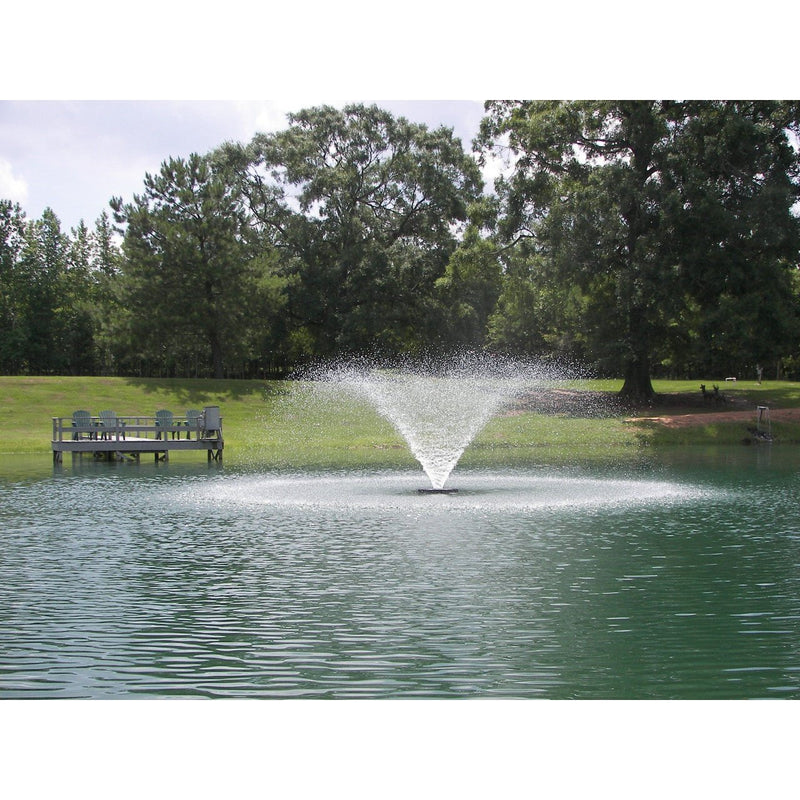
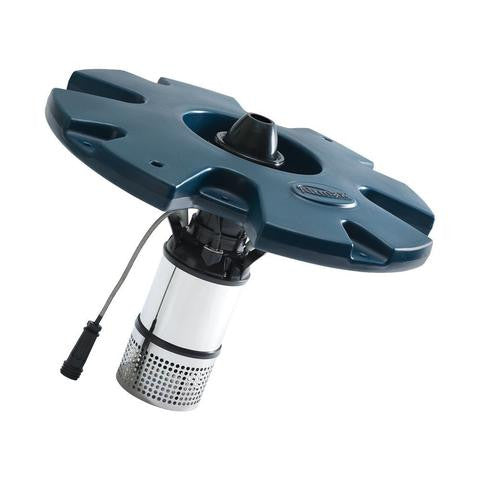
Very shallow ponds (under 5 feet) benefit less from diffused aeration because the bubbles do not have enough "hang time" in the water column to transfer significant oxygen or create a strong upward current. In these cases, surface aerators or fountains may be more effective at creating surface tension and facilitating gas exchange, though they do not help with bottom-level decomposition.
Extreme Organic Loads
If a pond is surrounded by heavy deciduous forest, the sheer volume of leaf litter can overwhelm even the best aeration system. Aeration increases the rate of decomposition, but it does not remove physical matter. In these scenarios, mechanical removal of leaves (pond netting) is a necessary supplement to aeration.
Energy Constraints
For ponds relying on solar-powered aeration, the shorter days of fall present a challenge. Reduced sunlight hours mean the system may not run long enough to maintain DO levels through the night, which is when oxygen demand is highest. Battery backups or supplemental grid power are often required for fall operations.
Surface Aeration vs. Diffused Aeration in the Fall
The choice between surface and diffused aeration depends on the specific goals of the fall maintenance program. Each system has different efficiency metrics when dealing with cold-water dynamics.
| Feature | Surface Aerator (Fountain) | Diffused (Bottom) Aerator |
|---|---|---|
| Primary Mechanism | Surface splash and tension reduction | Airlift and bubble-to-water transfer |
| Bottom Circulation | Minimal; top 2-4 feet only | Maximum; circulates entire column |
| Fall Decomp Support | Low | High |
| Winter Ice Opening | Prone to freezing or ice damage | Highly effective for gas venting |
| Efficiency (SAE) | Moderate | High in deep water |
Practical Tips for Fall Aeration Management
To optimize a system for the autumn season, several adjustments and maintenance tasks should be performed. These actions focus on maximizing efficiency and protecting the mechanical components of the system.
- Check Compressor Filters: Fall often brings increased dust and debris. A clogged air filter will reduce the CFM (cubic feet per minute) output of the compressor, leading to lower DO transfer rates.
- Gradual Startup: If the system has been off during the summer, do not run it 24/7 immediately. Start with 1 hour on the first day, 2 hours the second, and double the time daily to prevent a "shock" turnover.
- Monitor for Leaks: Air lines can become brittle or be damaged by rodents in the fall. Check for bubbles in unusual places (indicating a line leak) to ensure full pressure reaches the diffusers.
- Leaf Removal: While aeration helps decompose muck, physically removing leaves from the surface with a skimmer or net significantly reduces the total oxygen demand the system must combat.
Advanced Considerations: Biological Oxygen Demand (BOD) Math
Serious practitioners should understand the relationship between carbon input and oxygen consumption. The Biological Oxygen Demand (BOD) is a measure of the amount of oxygen required by aerobic microorganisms to decompose the organic matter in a sample of water.
In the fall, a single mature oak tree can drop approximately 100 to 200 pounds of leaves into a pond. As this carbon-rich material enters the water, it triggers a massive microbial bloom. For every pound of organic matter (dry weight), bacteria may require nearly two pounds of dissolved oxygen to fully oxidize it into carbon dioxide and water. In a 1-acre pond with 1,000 pounds of fall leaf load, the resulting oxygen debt is significant. Without mechanical aeration, the natural diffusion rate at the surface (often less than 0.05 mg/L per hour in still water) is mathematically insufficient to prevent anoxia.
Scenario: The "Silent" Fall Turnover
Consider a 1/2-acre pond with a maximum depth of 12 feet. During the summer, the bottom 4 feet (the hypolimnion) has become completely anoxic (0 mg/L DO). This layer contains 33% of the pond's total water volume. The top 8 feet is well-oxygenated at 7 mg/L.
In October, a series of cold nights drops the surface temperature from 65°F to 50°F. The surface water becomes denser than the water below it and begins to sink. As it sinks, it displaces the anoxic bottom water. The resulting mixture of 66% oxygenated water (7 mg/L) and 33% anoxic water (0 mg/L) results in a new total pond DO of approximately 4.6 mg/L.
While 4.6 mg/L might seem survivable, the sudden mixing also brings up high concentrations of CO2 and H2S. The bacteria stimulated by the mixing now begin to consume oxygen at an accelerated rate. Within 24 hours, the 4.6 mg/L can drop below 2.0 mg/L—the critical threshold for most sport fish. A continuous aeration system prevents this by ensuring the DO remains uniform at 7+ mg/L throughout the entire process, neutralizing the "shock" of the turnover.
Final Thoughts
Maintaining aeration through the autumn is a critical requirement for any biologically active pond. The "Cold Water Myth" ignores the reality of organic loading and the physical dangers of thermal turnover. By providing a constant supply of dissolved oxygen, a manager can ensure that the pond remains a healthy environment for fish and a functional system for breaking down debris.
The transition from summer to winter should be viewed as a period of high metabolic activity at the pond bottom, not a time of rest. Utilizing a diffused aeration system to facilitate gas exchange and prevent stratification is the most efficient method for preparing an ecosystem for the months of ice cover.
Implementing these technical strategies—monitoring BOD, adjusting diffuser depth, and maintaining mechanical integrity—will result in a clearer, healthier pond in the spring. Understanding the physics of water density and the chemistry of gas solubility allows for precise control over an environment that would otherwise be left to the volatility of seasonal changes.