

Do Pond Aerators Help Control Duckweed?
The green carpet isn't just a mess—it's free fertilizer if you manage it right. Before you reach for the chemicals to kill that duckweed, learn how aeration shifts the balance. Discover how to turn this fast-growing nuisance into a biological asset.
Managing a pond ecosystem requires a precise understanding of nutrient cycling and fluid dynamics. Duckweed, a member of the Lemnoideae subfamily, is often viewed as a catastrophic failure of pond aesthetics. However, from a mechanical and biological standpoint, it is a high-performance bio-filter that indicates an abundance of nitrogen and phosphorus. In stagnant systems, these nutrients remain bioavailable at the surface, fueling exponential growth. When managed through deliberate aeration, the system moves from a state of The Stagnant Nuisance toward The Harvested Asset.
Aeration does not simply "bubble" the water. It fundamentally alters the physical properties of the water surface and the chemical state of the benthos. By introducing mechanical energy and dissolved oxygen (DO), you can disrupt the lifecycle of floating macrophytes while optimizing the pond’s internal processing capacity. This article examines the technical mechanisms by which aeration controls duckweed and how to calibrate these systems for maximum efficiency.
Do Pond Aerators Help Control Duckweed?
Pond aerators are highly effective at controlling duckweed through two primary vectors: physical disruption and nutrient sequestration. Duckweed requires a calm, stagnant surface to colonize effectively. Its anatomy, consisting of small fronds and simple root structures, is optimized for floating on the surface tension of still water. Mechanical aeration breaks this surface tension, preventing the formation of a continuous mat. Without a stable surface, duckweed fronds are pushed to the littoral zones or submerged, where they cannot photosynthesize at peak rates.
Beyond physical interference, aeration targets the underlying cause of duckweed proliferation: excess nutrients. Duckweed thrives in environments with high concentrations of ammonia-nitrogen and orthophosphates. In anaerobic (oxygen-poor) conditions, pond sediment releases these nutrients back into the water column—a process known as internal loading. Aeration increases DO levels, which facilitates the growth of aerobic bacteria. These microbes compete with duckweed for nutrients and help lock phosphorus into the sediment through oxidation. Therefore, an aerator acts as both a physical barrier and a biological regulator.
Mechanical and Biological Mechanisms of Action
The control of duckweed via aeration involves a sophisticated interplay of fluid mechanics and microbiology. Understanding these processes is essential for designing an effective management strategy.
Surface Tension Disruption
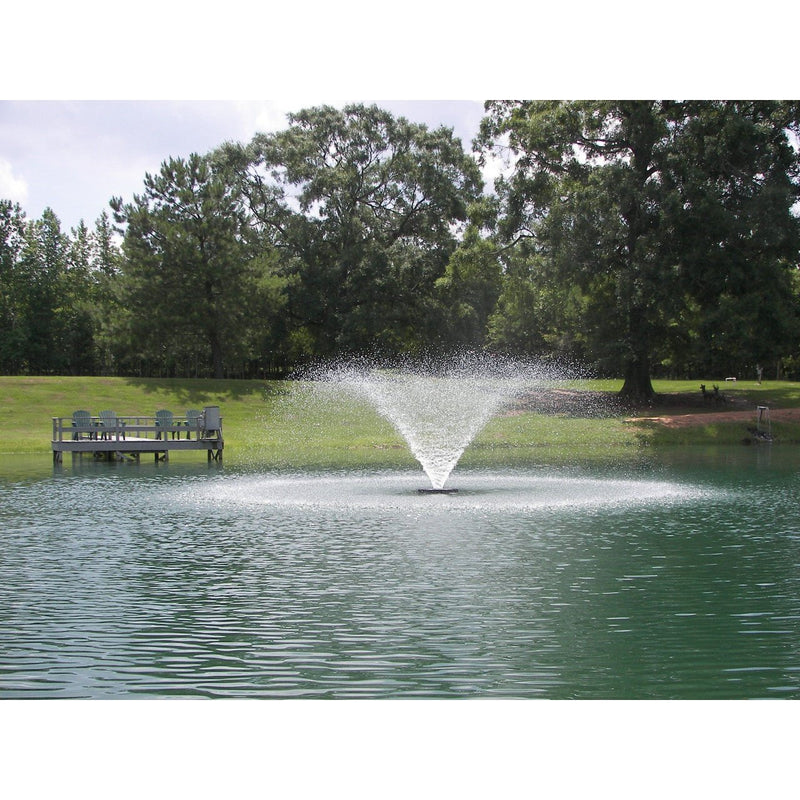
Water has a high surface tension that duckweed exploits to remain buoyant and oriented toward sunlight. Surface aerators, such as fountains or paddlewheels, create constant turbulence. This turbulence creates a "washout" effect. The mechanical energy creates waves that physically displace the fronds, forcing them into the shoreline. In many cases, the constant motion prevents the tiny plants from "hooking" onto one another, which is how they form the thick, light-blocking mats that lead to pond hypoxia.
The Role of Diffused Aeration
Subsurface or diffused aeration works differently. These systems use a compressor to push air through diffusers at the pond bottom. As the bubbles rise, they pull cold, nutrient-rich water from the bottom to the surface—a process called destratification. This vertical mixing ensures that oxygen reaches the "muck" layer at the bottom. When the bottom of the pond remains aerobic, the decomposition of organic matter is significantly faster and cleaner. This prevents the "rotten egg" smell associated with anaerobic decay and reduces the "free-floating" nutrients that duckweed requires to double its biomass every 48 hours.
Competitive Microbial Growth
Aerobic bacteria are significantly more efficient at processing organic waste than their anaerobic counterparts. By maintaining high DO levels (typically above 5 mg/L), you encourage the colonization of nitrifying bacteria. These bacteria convert toxic ammonia into nitrates, which are less accessible to floating plants if other submerged vegetation or beneficial algae are present. Essentially, the aerator shifts the competitive advantage from surface-dwelling weeds to microscopic organisms and subsurface plants.
Benefits of Using Aeration for Duckweed Management
Choosing aeration over chemical herbicides provides several long-term advantages for the pond manager focused on efficiency and sustainability.
- Chemical-Free Control: Aeration avoids the "kill-and-decay" cycle. Herbicides cause a massive die-off of plant matter, which sinks to the bottom and rots, consuming all available oxygen and releasing nutrients that trigger the next bloom.
- Enhanced Dissolved Oxygen: Higher DO levels prevent fish kills and support a diverse aquatic food web. This makes the pond more resilient to temperature spikes during summer months.
- Sediment Reduction: Active aeration promotes the "digestion" of organic muck. Over time, this can increase the effective depth of the pond and reduce the need for mechanical dredging.
- Harvesting Potential: By pushing duckweed to the edges of the pond, aerators make it significantly easier to harvest the biomass. This biomass can be used as high-protein animal feed (containing up to 40% crude protein) or as a nitrogen-rich compost additive.
Challenges and Common Technical Pitfalls
While aeration is a powerful tool, it is not a "set-and-forget" solution. Several factors can undermine the effectiveness of an aeration system in controlling duckweed.
Under-Sizing the System: The most common error is installing a compressor or fountain that lacks the CFM (cubic feet per minute) or GPM (gallons per minute) required for the pond's volume. If the water remains stagnant in the corners or "dead zones," duckweed will continue to thrive in those areas and eventually spread back across the pond when the aerator is off.
Ignoring Nutrient Inflow: Aeration manages the internal nutrient cycle, but it cannot stop external runoff. If the pond receives heavy loads of nitrogen from lawn fertilizers, agricultural runoff, or livestock waste, the nutrient supply may exceed the processing capacity of the aerobic bacteria. In such cases, duckweed will continue to grow despite the aeration.
Power Interruption: Duckweed is a pioneer species with a rapid reproduction rate. A few days of system downtime during peak summer heat can allow the plant to regain a foothold. Consistent operation is required to maintain the physical and chemical barriers established by the system.
Limitations: When Aeration May Not Be Ideal
Expectations must be grounded in the physical realities of the pond's environment. Aeration is a management tool, not an absolute eradicator.
In very shallow ponds (less than 3 feet deep), diffused aeration is less efficient because the bubbles do not have enough "rise time" to create a strong vertical current. In these environments, surface aerators or fountains are generally more effective at disrupting duckweed. Conversely, in very large lakes, the cost of installing enough aeration to cover the entire surface may be prohibitive compared to integrated pest management (IPM) strategies.
Environmental constraints also play a role. In areas with extremely high wind exposure, the natural wave action may already provide some surface disruption, making the incremental benefit of a mechanical aerator less noticeable. Furthermore, if the goal is total eradication of every single frond, aeration alone will rarely achieve this. It is designed to control and manage populations, not necessarily to create a sterile environment.
Comparison of Aeration Methods for Duckweed Control
Selecting the right hardware depends on pond depth, shape, and management goals. The following table compares the two primary aeration categories.
| Feature | Surface Aeration (Fountains/Bubblers) | Subsurface Diffused Aeration |
|---|---|---|
| Primary Mechanism | Physical surface disruption and wave action. | Total water column mixing and bottom oxygenation. |
| Duckweed Impact | Directly breaks surface tension; pushes plants to edges. | Indirectly reduces growth by starving plants of nutrients. |
| Efficiency (Oxygen Transfer) | Low to Moderate (1.5–3.0 lbs O2/hp-hr). | High (Up to 10 lbs O2/hp-hr in deep water). |
| Operating Cost | Higher (Requires moving large volumes of water). | Lower (Compressing air is more energy-efficient). |
| Ideal Depth | Shallow ponds (< 5 feet). | Deeper ponds (> 6 feet). |
Practical Tips for Optimizing Aeration Systems
Maximizing the ROI of an aeration system requires tactical placement and timing. Consider these best practices to ensure your equipment is actually working against the duckweed bloom.
- Strategic Placement: Position diffusers or fountains so that the prevailing wind works with the aerator. If the wind typically blows from the West, place the aerator on the West side to push duckweed toward the Eastern shore for easy removal.
- 24/7 Operation: During the peak growing season (late spring through early fall), run the system 24 hours a day. Turning it off at night allows the water to settle, giving duckweed a window to reorganize and colonize.
- Complement with Beneficial Bacteria: Supplementing the pond with concentrated aerobic bacteria strains can double the effectiveness of the aerator. The increased oxygen provides the environment these bacteria need to consume the nutrients duckweed craves.
- Monitor DO Levels: Use a simple dissolved oxygen meter to ensure your levels stay above 5 ppm (parts per million). If levels drop despite aeration, you may need to increase the CFM of your compressor.
Advanced Considerations: The Biological Asset
For the serious practitioner, duckweed should not be viewed merely as a weed to be destroyed. It is a biological machine capable of sequestering massive amounts of nitrogen. In wastewater treatment scenarios, aerators are used to keep the water moving underneath a controlled duckweed mat. This allows the duckweed to strip nutrients from the water while the aeration prevents the system from going septic.
By using a surface grid or boom, you can allow duckweed to grow in a specific section of the pond. The aerator keeps the rest of the pond clear. You then periodically harvest the duckweed from the grid, effectively "mining" nutrients out of your pond. This turns a nuisance into a renewable source of high-quality fertilizer or animal feed, provided you have a mechanical harvesting plan in place.
Example Scenario: The 1-Acre Farm Pond
Consider a 1-acre farm pond with an average depth of 6 feet. The pond is surrounded by pasture and receives significant nutrient runoff. Every July, a thick mat of duckweed covers 90% of the surface, leading to low oxygen levels and occasional fish kills.
A technical solution involves installing a 1/2 HP rocking piston compressor with two weighted diffusers. The diffusers are placed in the deepest areas to ensure maximum destratification. Upon startup, the system begins moving 4,000 gallons of water per minute toward the surface. Within two weeks, the constant vertical mixing has increased bottom-layer DO from 0.5 ppm to 6.2 ppm. Aerobic bacteria begin consuming the muck layer. The surface turbulence prevents the duckweed from forming a solid mat, pushing the existing plants into the cattails along the shoreline. By August, the duckweed coverage is reduced to less than 10%, and the water clarity has improved by 40% due to the reduction in suspended organic solids.
Final Thoughts
Aeration is a fundamental shift in how we approach pond management. It moves away from the reactive "spray-and-pray" mindset of chemical control and toward a proactive, system-based approach. By understanding the mechanical disruption of surface tension and the biological power of nutrient sequestration, you can effectively manage duckweed populations without compromising the health of the aquatic ecosystem.
Effective control requires the right equipment sized correctly for your specific pond dimensions. Whether you choose the physical power of a fountain or the deep-tissue mixing of a diffused air system, the goal remains the same: eliminate stagnation. When the water moves, the duckweed loses its competitive edge, and the pond returns to a state of balance. Experiment with placement and supplemental bacteria to find the "sweet spot" for your unique environment.