

DIY vs. Professional: When to Service Your Industrial Surface Aerator
Shift from being a consumer of service calls to a producer of uptime. You don't need a pro for everything, but doing it yourself can be risky. Learn the line between routine maintenance and professional overhaul.
Industrial wastewater treatment relies heavily on the continuous operation of mechanical components. In many facilities, aeration accounts for 50% to 70% of total electricity consumption. Maintaining the efficiency of these systems is not merely a matter of mechanical longevity; it is a direct driver of operational cost and regulatory compliance.
Understanding the mechanical limits of your equipment allows you to transition from reactive repairs to a proactive maintenance strategy. This guide examines the technical requirements for servicing industrial surface aerators, providing the data needed to determine when in-house resources are sufficient and when specialized intervention is required.
DIY vs. Professional: When to Service Your Industrial Surface Aerator
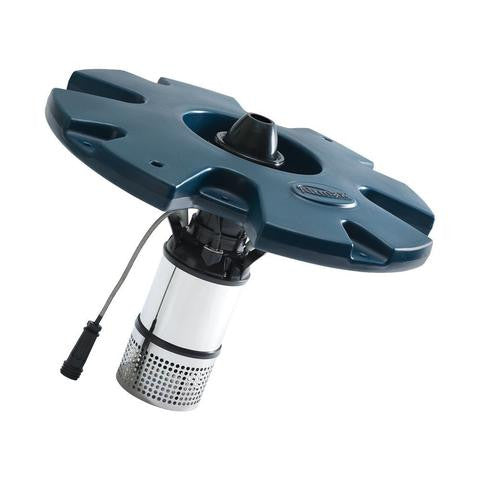
An industrial surface aerator is a mechanical device designed to increase dissolved oxygen (DO) levels in wastewater by creating high-velocity contact between the liquid and the atmosphere. These units are deployed in diverse environments, ranging from shallow lagoons in pulp and paper plants to deep-tank activated sludge processes in petrochemical facilities. The mechanical configuration generally consists of an electric motor, a drive shaft, and an impeller or propeller that shears the water surface to facilitate gas transfer.
The complexity of the service task depends largely on the drive type. High-speed aerators, which typically operate between 900 and 1,200 RPM, are direct-drive units that lack a gearbox. These are generally more accessible for in-house maintenance teams. Conversely, low-speed aerators operate at 40 to 60 RPM and utilize heavy-duty gear reducers to achieve high torque. These units require specialized knowledge of gear geometry and internal lubrication systems.
Routine DIY servicing involves tasks that do not compromise the structural integrity or factory alignment of the unit. This includes cleaning debris from the intake, monitoring electrical draw, and executing lubrication schedules. Professional intervention becomes mandatory when the mean time between failure (MTBF) decreases or when vibration analysis indicates internal bearing degradation that exceeds ISO 10816 standards.
Mechanical Systems and Oxygen Transfer Physics
The efficiency of a surface aerator is measured by its Oxygen Transfer Efficiency (OTE), which typically ranges from 1.25 to 2.25 pounds of oxygen per horsepower-hour (lb/hp-h). This process is governed by the two-film theory, where the rate of gas transfer is proportional to the surface area created by the impeller and the turbulence of the water.
Mechanical degradation directly impacts this physics. A fouled impeller or a misaligned shaft introduces turbulence that does not contribute to oxygen transfer, effectively converting electrical energy into wasted heat and vibration rather than dissolved oxygen. For example, a 5% reduction in impeller diameter due to erosion can lead to a disproportionate drop in OTE, forcing the system to run longer to maintain DO setpoints of 2.0 mg/L.
Maintenance Procedures: Step-by-Step Technical Protocols
Effective maintenance requires a systematic approach to the three core subsystems: the motor, the drive assembly, and the wet-end components.
1. Electrical System Assessment
Verify the voltage and amperage under full load. Voltage drop from the control panel to the motor should never exceed 5%. Using a megohmmeter (Megger), test the insulation resistance of the motor windings. A reading below 5 megohms indicates moisture ingress or insulation breakdown, necessitating a professional motor rebuild.
2. Lubrication of Rotating Parts
For units requiring manual lubrication, such as the Aqua-Jet or similar vertical shaft designs, use a high-performance grease like Chevron Black Pearl EP 2. This polyurea-based grease is preferred for its water washout resistance and mechanical stability.
- Identify the grease fittings and relief ports.
- Clean the fittings to prevent the introduction of contaminants.
- Apply the manufacturer-specified volume (measured in "pumps" or grams) based on the motor horsepower.
- Run the motor for at least two hours to allow the grease to distribute and for the excess to purge through the vent.
3. Impeller and Shaft Cleaning
Algae, sludge, and fibrous materials (rags) can accumulate on the shaft and impeller. This adds eccentric mass, leading to unbalance. Monthly cleaning should involve wiping down the stainless steel shaft and checking the nozzle or aspirator for blockages. If the unit is removed from the water, use a power washer but avoid direct spray on the mechanical seal area to prevent seal displacement.
Benefits of Mechanical Optimization
The primary benefit of a rigorous maintenance program is the stabilization of the Oxygen Transfer Rate (OTR). When a surface aerator operates at its design specifications, it achieves the maximum possible "alpha factor"—the ratio of oxygen transfer in wastewater versus clean water.
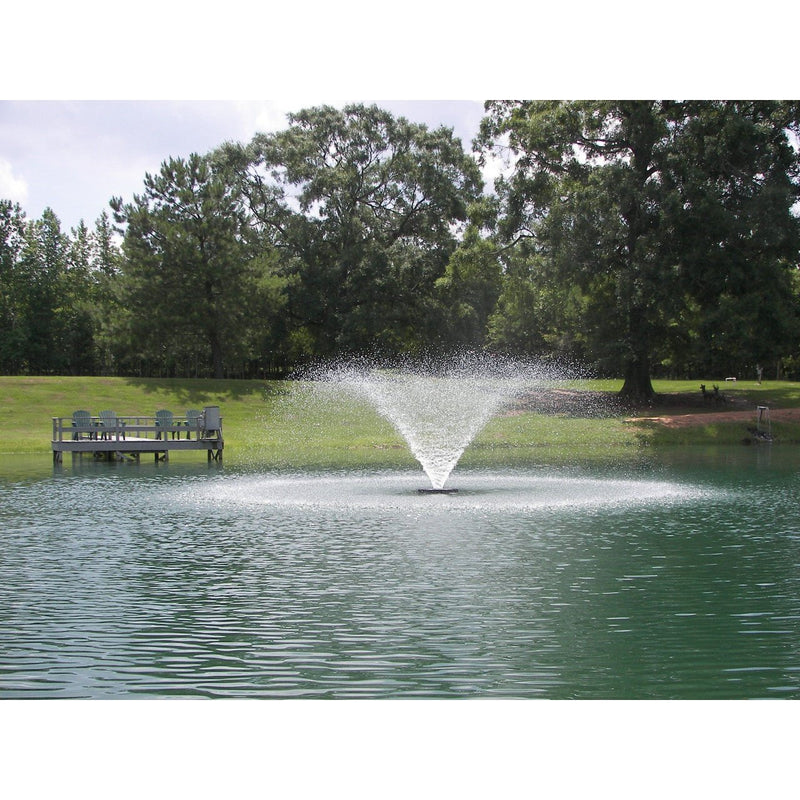
Maintaining mechanical alignment and clean impellers ensures the "umbrella" spray pattern remains symmetrical. A symmetrical spray pattern maximizes the surface area-to-volume ratio of the water droplets, which is the primary mechanism for oxygenation. Furthermore, optimized lubrication reduces internal friction, potentially lowering the amperage draw of a 50 HP motor by 2–3 amps, resulting in significant annual energy savings.
Challenges and Common Mechanical Mistakes
A frequent error in industrial environments is over-greasing the motor bearings. Excessive grease creates internal pressure that can blow out the inner bearing seals, forcing lubricant into the motor windings. This causes overheating and eventual winding failure. Always ensure the grease vent plug is removed during the lubrication process.
Another challenge is the management of moisture in gearboxes. Gear oils in wastewater environments are subject to chronic condensation. Research indicates that just 1% water contamination in gear oil can reduce bearing life by up to 90%. Using desiccant breathers on gearbox vents is a technical best practice to mitigate this risk, yet it is often overlooked by general maintenance teams.
Limitations: When DIY Is Not Ideal
There are clear technical boundaries where in-house maintenance must stop. Structural repairs to the mooring system or the replacement of the primary mechanical seal on an oil-cooled motor typically require specialized rigging and factory-trained technicians.
Floating surface aerators are often moored with cables or rigid arms. If the mooring tension is uneven, the unit may tilt, causing the impeller to draw air (cavitation) or strike the water at an angle. Adjusting these systems requires a boat and specific tensioning tools. If a unit shows signs of "hunting" (oscillating on its moorings), it indicates a hydraulic imbalance that may require a professional to re-evaluate the tank's flow dynamics.
High-Speed vs. Low-Speed Aerator Comparison
The maintenance profile varies significantly between the two primary classes of surface aerators.
| Feature | High-Speed Aerator | Low-Speed Aerator |
|---|---|---|
| Rotational Speed | 900–1,200 RPM | 40–60 RPM |
| Drive System | Direct Drive (No Gearbox) | Gear Reducer / Helical Gears |
| Lubrication Needs | Grease (Bearings) | ISO VG 320 Oil + Grease |
| Common Failure | Bearing wear / Shaft unbalance | Gear pitting / Seal leaks |
| DIY Difficulty | Low to Moderate | High |
Practical Tips for Best Practices
- Implement Vibration Baseline: Use a handheld vibrometer to record the RMS velocity in mm/s when the unit is new or recently serviced. Monitor this monthly.
- Thermal Imaging: Use an infrared camera to check motor housing temperatures. A "hot spot" on a specific bearing usually precedes a mechanical failure by weeks.
- VFD Integration: Using Variable Frequency Drives allows you to soft-start the aerators, reducing the mechanical shock on the shaft and bearings during start-up.
- Winterization: In cold climates, ice build-up on the spray collar can cause severe unbalance. Consider removing units or installing heating elements if operation is required in sub-zero temperatures.
Advanced Considerations: Vibration Analysis
For serious practitioners, following the ISO 10816-3 guidelines is essential for predictive maintenance. This standard categorizes machinery by power and support type. Most industrial aerators fall into Category II (Medium machines, 15 kW to 300 kW).
A reading in **Zone A** (<2.3 mm/s RMS) indicates a machine in "new" condition. **Zone C** (4.5 to 7.1 mm/s RMS) signals that the machine is "unsatisfactory" and should only be operated for limited periods until a professional alignment or balance is performed. Readings in **Zone D** (>7.1 mm/s) require immediate shutdown to prevent catastrophic failure of the motor mounts or shaft.
Scenario: 50 HP High-Speed Unit Maintenance
Consider a 50 HP floating aerator in a paper mill lagoon. The unit has been in service for 18 months. During a routine inspection, the technician notes a slight "hum" and an increase in amperage from 62A to 65A.
The DIY response involves pulling the unit to the shore and inspecting the impeller. If 2 kg of plastic debris is found wrapped around the shaft, removing it should return the amperage to the baseline. However, if the vibration persists after cleaning, the technician should check for shaft run-out using a dial indicator. If the run-out exceeds 0.05 mm, the shaft is likely bent, and a professional machine shop must be engaged for straightening and dynamic balancing.
Final Thoughts
Maintaining an industrial surface aerator requires a balance of basic mechanical care and advanced diagnostic monitoring. By mastering the fundamentals of lubrication, electrical testing, and vibration monitoring, you shift your role from a consumer of emergency repairs to a producer of consistent uptime.
Proactive maintenance not only extends the L10 life of your bearings but also ensures that your wastewater treatment process remains energy-efficient and compliant with environmental standards. When you understand the technical limits of your equipment, you can make informed decisions about when to tackle a repair in-house and when to bring in the experts.
Applying these strategies will result in a more resilient facility and a lower total cost of ownership over the life of your aeration assets. Continue to experiment with predictive tools like thermal imaging and vibration analysis to further refine your maintenance intervals.