

Diffused Aeration vs Surface Aerators: Which Works Better For Your Pond?
One splashes the top; the other moves the bottom. Picking the wrong one leaves half your pond dead. Surface aerators are great for shallow water, but diffused systems are the kings of the deep. Which one fits your pond's profile?
Aeration is the mechanical process of increasing the dissolved oxygen (DO) concentration in a body of water. This process is critical for maintaining aerobic biological activity, which prevents the accumulation of organic muck and protects aquatic life from hypoxia. Choosing between a surface system and a diffused system is not a matter of preference but a requirement dictated by the bathymetry and biological oxygen demand (BOD) of the specific environment.
Understanding the mechanical differences between these systems ensures that the energy consumed translates into effective gas exchange. While a surface aerator relies on active agitation to facilitate transfer at the air-water interface, a diffused system utilizes passive sub-surface flow to move the entire water column.
Diffused Aeration vs Surface Aerators: Which Works Better For Your Pond?
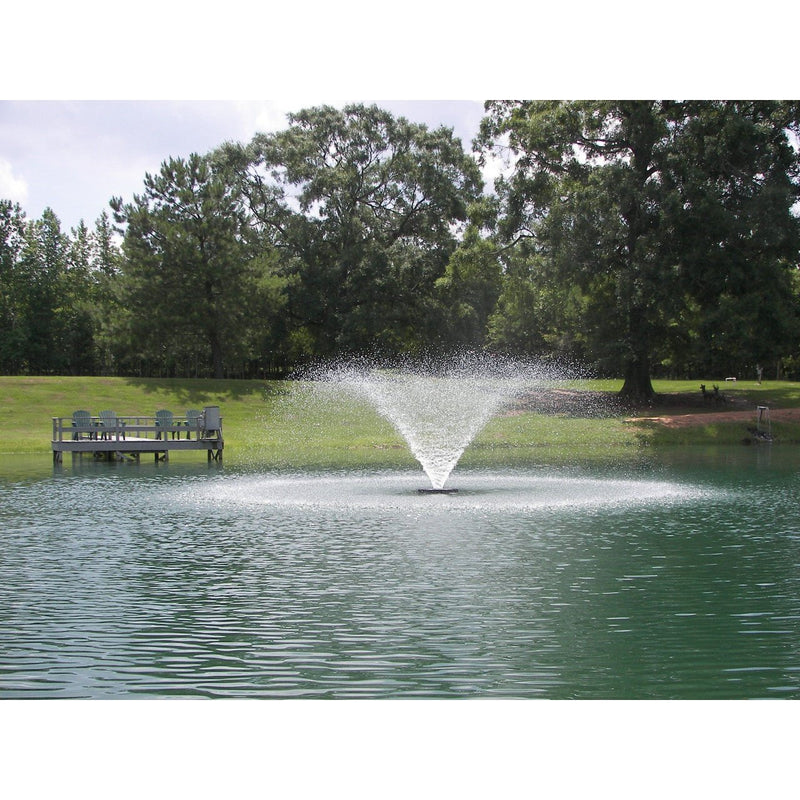
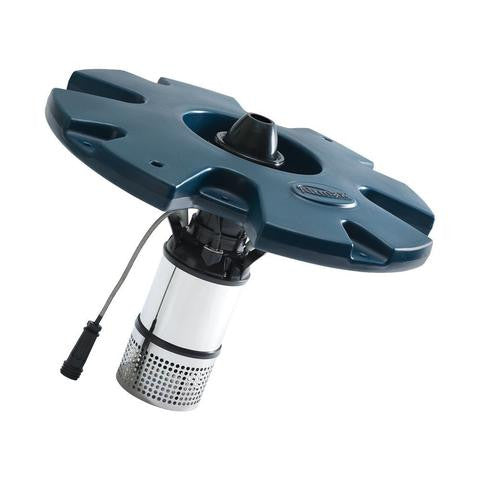
The selection between diffused aeration and surface aerators depends primarily on water depth and the goal of the aeration strategy. Surface aerators are mechanical devices that float on the water's surface, using an impeller to draw water from the top 1 to 3 feet and spray it into the air. This action creates a high-velocity impact that breaks the water into small droplets, significantly increasing the surface area for atmospheric oxygen absorption.
Diffused aeration systems operate from the bottom up. An onshore compressor pushes air through weighted tubing to a diffuser membrane located at the pond floor. The diffuser breaks the air into millions of tiny bubbles. As these bubbles rise, they transfer oxygen through their surface area and, more importantly, create a vertical current that pulls deoxygenated, cold water from the bottom to the surface for gas exchange.
In real-world applications, surface aerators are the standard for shallow lagoons or ponds where the depth does not exceed 6 to 8 feet. In these environments, the mechanical energy of the splashing is sufficient to mix the shallow volume. Conversely, in ponds deeper than 8 feet, surface aerators fail to reach the lower strata, leaving a "dead zone" of anaerobic water at the bottom. Diffused systems excel here because they utilize the physics of the "air-lift" effect, which becomes more efficient as the depth—and therefore the bubble's travel time—increases.
How It Works: The Mechanics of Oxygen Transfer
To understand how these systems function, one must look at the Standard Oxygen Transfer Rate (SOTR). This is the amount of oxygen added to the water in one hour under standard conditions (20°C, 0 mg/L DO). The efficiency of this transfer is governed by the gas transfer equation: dC/dt = KLa(Cs – Cm). In this equation, KLa represents the oxygen transfer coefficient, Cs is the saturation concentration, and Cm is the actual measured DO.
Surface Aerator Mechanism
Surface aerators maximize the A/V (area to volume) ratio by shearing water into droplets. When these droplets travel through the air, they reach near-saturation levels of oxygen almost instantly. When they fall back into the pond, they carry this oxygen with them and create localized turbulence that pushes the oxygenated water downward. This is often referred to as "active agitation" because the mechanical energy is applied directly to the water to create the air-water interface.
Diffused Aeration Mechanism
Diffused systems focus on the KLa and the contact time. As a bubble rises from the bottom, the hydrostatic pressure decreases, causing the bubble to expand slightly. During its ascent, oxygen molecules diffuse across the bubble's membrane into the surrounding water. This is "passive sub-surface flow" because the air is introduced at a single point and the resulting movement of the water is a byproduct of the rising air. Fine-bubble diffusers are generally preferred over coarse-bubble types because they produce a higher surface-area-to-volume ratio, leading to better Standard Aeration Efficiency (SAE).
Benefits of Targeted Aeration Systems
Selecting the correct system yields measurable improvements in water chemistry and energy expenditures.
Advantages of Surface Aerators
- High SOTR in Shallow Water: In depths under 5 feet, surface aerators can transfer oxygen faster than diffused systems because they don't have to overcome the backpressure of deep water.
- Immediate Degassing: The aggressive splashing is highly effective at venting harmful gases like methane, hydrogen sulfide, and carbon dioxide that accumulate in stagnant water.
- Visual Feedback: The splashing provides an immediate visual and auditory confirmation that the system is functioning, which is useful for quick inspections.
Advantages of Diffused Aeration
- Energy Efficiency at Depth: Standard Aeration Efficiency (SAE) for fine-bubble diffusers typically ranges from 2.0 to 4.0 kg O2/kW-hr in deep water, whereas surface aerators often hover between 1.2 and 2.2 kg O2/kW-hr.
- Destratification: By pulling water from the bottom to the top, diffused systems break the thermocline (the barrier between warm top water and cold bottom water). This ensures that the entire pond volume remains aerobic.
- Safety and Aesthetics: No electrical components are in the water, which reduces the risk of stray current. Additionally, there is no large splash, making the system nearly invisible to the eye.
Challenges and Common Mistakes
Misapplication of aeration technology is a frequent cause of system failure and aquatic mortality.
Oversizing Surface Units in Deep Ponds: A common error is installing a high-horsepower surface aerator in a deep pond. While the surface may look turbulent, the bottom 10 feet remain anaerobic. This leads to a buildup of toxic gases. If a sudden weather event causes the pond to "turn over," that toxic bottom water mixes with the top, often resulting in a total fish kill.
Neglecting Compressor Maintenance: Diffused systems rely on air compressors that run 24/7. Failing to change air filters or replace diaphragms every 12 to 24 months leads to a drop in PSI. When the pressure drops, the air cannot overcome the hydrostatic head of the water, and oxygenation ceases even though the motor is still running.
Incorrect Diffuser Placement: Placing all diffusers in the deepest part of the pond may leave shallow "coves" or "fingers" stagnant. Effective aeration requires a layout that accounts for the pond's unique shape to ensure no dead zones remain.
Limitations: When the Method Fails
No aeration system is a universal solution. Each has environmental and physical constraints.
Surface aerators are limited by the "effective mixing depth." Even the most powerful surface units rarely influence water deeper than 10 feet. Furthermore, they are prone to mechanical failure in environments with high debris, as floating weeds or trash can clog the impeller and burn out the motor. In cold climates, surface aerators can create dangerous ice conditions or become encased in ice, requiring them to be removed during winter.
Diffused aeration is limited by "hydrostatic backpressure." For every foot of depth, the compressor must overcome 0.43 PSI. In very shallow water (under 4 feet), the bubbles do not have enough travel time to transfer significant oxygen, and the "air-lift" current is too weak to move much water. In these cases, the energy required to compress the air is wasted because the bubbles reach the surface too quickly.
Comparison: Active Agitation vs. Passive Sub-Surface Flow
The following table compares the performance metrics of the two systems based on standard industry data.
| Feature | Surface Aerator (Active) | Diffused System (Passive) |
|---|---|---|
| Primary Depth Range | 1 – 8 Feet | 8 – 40+ Feet |
| SAE (kg O2/kW-hr) | 1.2 – 2.2 | 2.0 – 4.0 |
| Maintenance Location | In-water / On-surface | On-shore (Compressor) |
| Vertical Mixing | Poor | Excellent |
| Operating Noise | Moderate (Splashing) | Low (Sub-surface) |
Practical Tips for System Optimization
To maximize the efficiency of your chosen system, follow these technical best practices:
- Use Weighted Tubing: For diffused systems, always use lead-lined or weighted PVC tubing. Non-weighted tubing will float to the surface, creating a trip hazard and allowing UV rays to degrade the material.
- Match Blower Type to Depth: Use linear diaphragm compressors for shallow water (under 8 feet) and rocking piston compressors for deep water (up to 40 feet). Using a diaphragm pump in deep water will cause the diaphragm to rupture due to excessive backpressure.
- Size by Volume, Not Surface Area: Calculate the total acre-feet of your pond (Surface Acres x Average Depth). A pond that is 1 acre but 20 feet deep requires significantly more aeration than a 1-acre pond that is only 5 feet deep.
- Cycle Aeration in Summer: In extremely hot weather, dissolved oxygen levels are naturally lower. Running diffused aeration 24/7 is essential, but if using a surface aerator, focus on running it during the night and early morning when photosynthesis is not providing oxygen.
Advanced Considerations: The Alpha Factor and Oxygen Solubility
Serious practitioners must consider the "Alpha Factor" (α), which is the ratio of oxygen transfer in process water versus clean water. In ponds with high organic loading or salinity, the α factor drops. This means a system rated for 2.0 lbs O2/hp-hr in a lab might only deliver 1.2 lbs O2/hp-hr in a muck-heavy pond.
Furthermore, oxygen solubility is inversely proportional to temperature. At 10°C, water can hold approximately 11.3 mg/L of DO at saturation. At 30°C, that number drops to 7.5 mg/L. This means that during the hottest months, your aeration system is fighting a losing battle against physics. Increasing the air-flow rate (SCFM) into a diffused system during these peaks is often necessary to compensate for the lower solubility.
Scenario: Aerating a 1-Acre Retention Pond
Consider a 1-acre retention pond with an average depth of 12 feet.
If you choose a 1.5 HP surface aerator, you will successfully oxygenate the top 4 feet of the water column. However, the remaining 8 feet (approx. 2.6 million gallons) will stay stratified. Organic matter will settle at the bottom, decay anaerobically, and produce ammonia.
If you choose a 1/2 HP diffused aeration system with two diffuser plates, you use one-third the power. The rising bubbles from the 12-foot depth will create a "laminar flow" that pulls the bottom water to the surface. Calculations show that a 1/2 HP rocking piston compressor can move approximately 2,000 gallons of water per minute through the air-lift effect. This ensures the entire 1-acre-foot volume is circulated multiple times per day, maintaining aerobic conditions throughout.
Final Thoughts
Selecting between diffused aeration and surface aerators is a technical decision that determines the biological health of an aquatic system. Surface aerators provide high-intensity oxygenation and degassing for shallow environments but lack the reach for deep-water management. They are the tools of choice for high-rate oxygen transfer in limited depths.
Diffused systems are the superior choice for deep-water destratification and energy efficiency. By leveraging the physical properties of rising air, they move vast quantities of water with minimal electrical input. For any pond deeper than 8 feet, the diffused approach is the only way to ensure the entire water column remains habitable.
The key to a successful installation is matching the mechanical capability of the aerator to the specific bathymetry of the pond. Practitioners should prioritize SAE and vertical mixing capacity over visual aesthetics. Experimenting with diffuser placement and monitoring DO levels at various depths will lead to a more stable and resilient aquatic ecosystem.