

Converting Retention Ponds To Wildlife Habitat
Your pond can be a stagnant drainage ditch or a thriving wild refuge; the difference is in the breath of the water. Urban ponds often become toxic pits of stagnant runoff. Adding aeration and allowing nature to reclaim the edges, you transform a liability into a sanctuary for birds, fish, and your family.
Converting Retention Ponds To Wildlife Habitat
Retention ponds, technically known as wet detention basins, are engineered structures designed to manage stormwater runoff. These systems capture water from impervious surfaces like roads and parking lots, holding it permanently to allow sediments to settle and peak flow rates to diminish. Traditionally, these are managed as high-maintenance assets with mowed turfgrass and steep, concrete-reinforced banks. This approach results in a sterile drain that offers minimal ecological value and often suffers from poor water quality.
Converting these basins into wildlife habitats involves shifting the management paradigm from purely hydraulic control to a combined hydraulic and ecological function. In real-world applications, this transition replaces manicured grass with native vegetation and introduces mechanical or biological systems to enhance nutrient cycling. A naturalized pond functions as a functional wetland, using the same footprint to provide flood control while sequestering pollutants like nitrogen and phosphorus.
Ecological restoration of these ponds is common in urban planning and HOAs seeking to reduce maintenance costs and improve community aesthetics. Instead of a fenced-off hazard, a naturalized pond becomes a "Wild Sanctuary" that supports local biodiversity, including amphibians, pollinators, and migratory waterfowl. The core objective is to maximize the pond's "residence time"—the duration water remains in the system—to facilitate natural filtration processes.
How to Naturalize a Retention Pond System
The transition from a sterile basin to a habitat requires a systematic approach to hydrology, biology, and mechanical support. Success depends on several key technical steps:
1. Bathymetry and Slope Modification
Standard retention ponds often feature steep slopes for maximum volume. To support wildlife, engineers recommend a 10:1 or 6:1 slope at the "littoral shelf"—the shallow area around the edge. This provides a safe zone for emergent plants and allows amphibians to exit the water easily. Creating varying depths, from 6-inch shallow marshes to 8-foot deep pools, ensures thermal refuge for fish during temperature extremes.
2. Implementing Diffused Aeration
Aeration is the primary mechanical optimization for any pond. For ponds deeper than 6 feet, submersed diffused aeration systems are most effective. These systems use an on-shore compressor to pump air through weighted tubing to diffusers on the pond floor. As bubbles rise, they move oxygen-poor water from the bottom to the surface, breaking the thermocline and preventing anaerobic "dead zones." Aim for a minimum dissolved oxygen (DO) level of 2.0 mg/L at all times to support aerobic bacteria.
3. Vegetation Zonation
Establishing native plant zones is critical for nutrient uptake.
- Emergent Zone: Plants like Pickerelweed (Pontederia cordata) and Softstem Bulrush (Schoenoplectus tabernaemontani) thrive in 0-12 inches of water, stabilizing banks and filtering runoff.
- Submergent Zone: Rooted plants completely underwater provide essential cover for fish and produce oxygen via photosynthesis.
- Upland Buffer: A 15-foot "no-mow" zone of native grasses and wildflowers prevents geese from congregating and filters lawn fertilizers before they enter the water.
4. Nutrient Management with Floating Wetlands
In deep ponds where traditional plants cannot root, Floating Treatment Wetlands (FTWs) provide an advanced solution. These buoyant mats support hydroponic plant growth, with roots extending directly into the water column. Studies show FTWs can enhance total nitrogen (TN) removal by 18.2% and total phosphorus (TP) removal by 8.2% compared to unplanted controls. Microbes colonizing the root mass are responsible for the majority of this nutrient sequestration.
Benefits of Naturalized Pond Ecosystems
The primary advantage of converting a sterile drain into a wild sanctuary is the measurable improvement in water quality. Naturalized ponds significantly outperform conventional basins in pollutant removal. Research indicates that total phosphorus concentrations in naturalized ponds (NSPs) are often three to eight times lower than in conventional stormwater ponds (CSPs). TP levels in NSPs frequently remain below 0.2 mg/L, whereas CSPs can spike to 3.3 mg/L during summer months.
Maintenance cost reduction is a significant driver for this change. Eliminating weekly mowing of pond banks reduces fuel consumption, labor costs, and the risk of equipment sliding into the water. Native perennials, once established, require only annual or biennial thinning. This shift from high-frequency "aesthetic" maintenance to low-frequency "ecological" management saves thousands of dollars over the asset's lifecycle.
Biodiversity metrics improve rapidly after conversion. Naturalized edges attract Odonata (dragonflies and damselflies), which serve as natural controls for mosquito populations. These ponds also provide critical habitat for amphibians like the American Bullfrog, which are sensitive to the pollutants found in untreated urban runoff. By providing a diverse physical structure, the pond becomes a hub for local food webs.
Challenges and Common Technical Pitfalls
The most frequent error in pond conversion is failing to account for sediment accumulation. As water slows in the pond, it drops its load of TSS (Total Suspended Solids). Over time, this "muck" reduces pond volume and residence time. If the pond loses 50% of its residence time, its nutrient removal efficiency can drop from 55% to 45% or lower. Regular sediment monitoring is mandatory to ensure the system maintains its design capacity.
Invasive species represent a major biological hurdle. Without competition, aggressive species like Common Reed (Phragmites australis) or Narrowleaf Cattail can monoculture the pond, choking out native diversity and reducing open water area. Management must include proactive spotting and removal of invasives during the first three years of establishment. Neglecting this phase often leads to a "clogged" system that requires expensive mechanical dredging.
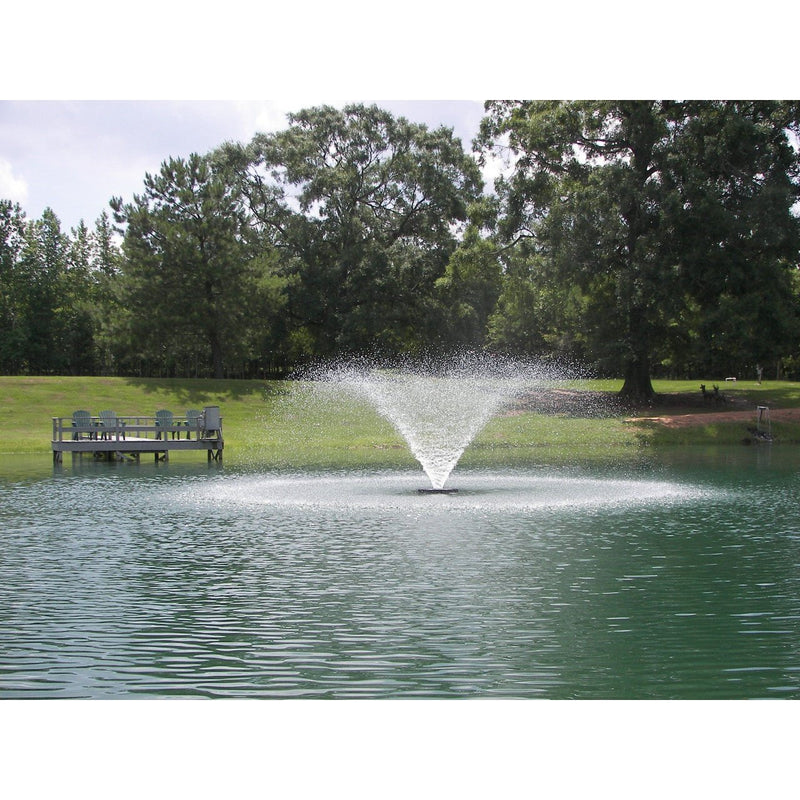
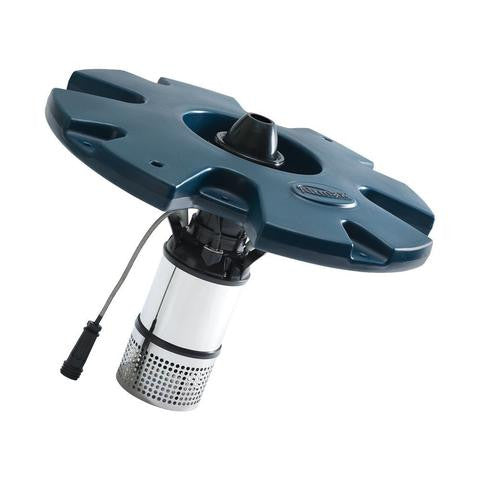
Improper aeration sizing is another mechanical failure point. Many managers install decorative fountains, assuming they provide sufficient oxygen. However, surface fountains typically have a low Standard Oxygen Transfer Efficiency (SOTE) of 8-15%. In deep ponds, fountains fail to circulate the bottom water. A poorly engineered system will result in a pond that remains stratified, leading to periodic fish kills and odor problems despite the presence of "aeration" equipment.
Limitations and Environmental Constraints
Not every retention pond is a candidate for full naturalization. High-load industrial basins, for example, may accumulate heavy metals like lead, zinc, and copper. If these toxins reach high enough concentrations in the sediment, attracting wildlife to the pond creates an "ecological trap," where the habitat looks inviting but is actually harmful to the organisms using it. In these cases, focus should remain on technical filtration rather than habitat creation.
Size and hydraulic load also dictate limitations. Small, "flashy" basins that receive high-velocity runoff from small drainage areas may experience frequent "washouts" of new plantings. If the retention time is less than 72 hours, the biological components of the system may not have enough time to process nutrients effectively. These systems are better suited for mechanical filtration or rock-lined detention rather than complex wetland habitats.
Comparison: Sterile Drain vs. Wild Sanctuary
The choice between maintaining a sterile drain and investing in a wild sanctuary involves weighing initial costs against long-term ecological and financial returns. The table below compares these two management strategies based on key performance indicators.
| Metric | Sterile Drain (Conventional) | Wild Sanctuary (Naturalized) |
|---|---|---|
| Vegetation | Mowed turfgrass, exotic shrubs | Native emergents, upland buffers |
| Phosphorus Removal | 40% - 60% (Sedimentation only) | 70% - 90% (Biological + Sediment) |
| Maintenance Frequency | Weekly (Mowing/Spraying) | Annual (Pruning/Monitoring) |
| Aeration Strategy | Decorative Fountain (Surface) | Submersed Diffused Aeration (Bottom) |
| Habitat Value | Minimal; promotes invasive geese | High; supports fish, birds, insects |
| Average TP Levels | 0.2 - 0.8 mg/L | < 0.2 mg/L |
Practical Tips for Pond Optimization
Optimization of a naturalized pond requires attention to the chemical and physical environment. Follow these best practices to ensure long-term stability:
- Conduct a Water Analysis: Before selecting plants or aeration, test the water for pH, ammonia, nitrates, and dissolved phosphorus. High ammonia levels suggest a need for increased aeration to support nitrifying bacteria.
- Establish a No-Mow Buffer: Stop mowing within 10 to 15 feet of the water's edge. This allows native seeds to sprout and creates a physical barrier that deters Canada geese, who prefer open sightlines to avoid predators.
- Use Fine-Bubble Diffusers: When installing aeration, select fine-bubble diffusers over coarse-bubble ones. Fine bubbles have an SOTE of approximately 6.9% per meter of depth, nearly double the efficiency of coarse-bubble systems.
- Plant High-Performers: Species like Juncus effusus (Soft Rush) are top performers for nutrient uptake, capable of fixing significant amounts of nitrogen and phosphorus in their biomass.
Advanced Considerations: Microbial Inoculation
Serious practitioners often go beyond plants and aeration by introducing beneficial microbial inoculants. These "sludge-eating" bacteria accelerate the decomposition of organic muck on the pond floor. By reducing the organic layer, you effectively increase the water column's volume and prevent the release of legacy phosphorus back into the water (a process known as internal loading).
Managing the "Redox Potential" of the sediment is another advanced technique. By maintaining an aerobic environment at the sediment-water interface through diffused aeration, you ensure that iron and other minerals bind to phosphorus, keeping it locked in the soil rather than feeding algae blooms. This chemical management is essential for ponds receiving high nutrient loads from agricultural or suburban runoff.
Example Scenario: The 1-Acre Suburban Pond
Consider a 1-acre retention pond in a suburban development with an average depth of 8 feet. In its sterile state, it costs the HOA $4,500 annually in mowing and herbicide treatments to control "scum." The pond suffers from summer algae blooms and frequent fish kills due to low oxygen.
The conversion involves installing a 1-HP diffused aeration system ($2,500) and planting 500 square feet of native emergents ($1,500). Within two seasons, the aeration maintains DO levels above 5.0 mg/L throughout the water column. The native plants and no-mow buffer reduce the annual maintenance cost to $800 for a single annual cleanup. The phosphorus levels drop from 0.5 mg/L to 0.15 mg/L, eliminating the need for expensive algaecide treatments and creating a clear-water state that supports a healthy population of Bluegill and Largemouth Bass.
Final Thoughts
Transforming a retention pond into a wildlife habitat is a move toward infrastructure that works with nature rather than against it. Shifting from the energy-intensive management of a sterile drain to the self-regulating processes of a wild sanctuary provides measurable benefits in water quality, biodiversity, and operational cost savings. The integration of submersed aeration and native plant zones ensures that the pond remains a functional asset for stormwater management while serving as a biological cornerstone for the local environment.
Implementing these changes requires a technical understanding of nutrient cycling and hydraulic design. However, the result—a resilient, clear-water ecosystem—far outweighs the initial effort of the conversion. Practitioners should continue to monitor sediment and vegetation health to ensure the system evolves into a stable, long-term sanctuary for both wildlife and the human community.