

Case Study: Fixing a Pond with Chronic Algae and Fish Kills Using Aeration
From a liability to a legacy.
This pond was a 'dead zone' for five years. See how we flipped the switch from toxic sludge to a family treasure using nothing but air.
Managing a private water body often reveals a harsh reality: standing water is a biological ticking clock. Without mechanical intervention, most closed-system ponds eventually succumb to eutrophication—a process where nutrient enrichment leads to excessive plant growth, oxygen depletion, and eventual system collapse. The transition from a "dead zone" to a thriving ecosystem is not achieved through chemical additives alone, but through the precise application of fluid dynamics and aerobic microbiology.
By introducing bottom-diffused aeration, we address the fundamental cause of pond degradation: thermal stratification and the resulting anoxic conditions at the benthos. This guide provides the technical framework required to design, install, and optimize an aeration system capable of transforming a high-maintenance liability into a high-performance trophy fishery.
Case Study: Fixing a Pond with Chronic Algae and Fish Kills Using Aeration
The transformation of a degraded water body begins with identifying the mechanical and biological failures of the existing environment. In this case study, we examine a 1.5-acre pond with a maximum depth of 14 feet and a 5-year history of summer fish kills and filamentous algae blooms.
Before intervention, the pond exhibited classic "Toxic Eyesore" characteristics. Thermal stratification had created a distinct thermocline at the 6-foot mark. Above this line, water was warm and oxygen-saturated; below it, the water was cold, stagnant, and completely anoxic (0.0 mg/L Dissolved Oxygen). This anoxic zone—the hypolimnion—accumulated high concentrations of hydrogen sulfide and methane, while organic "muck" on the bottom reached depths of 18 inches.
The implementation of a diffused aeration system changed the physical properties of the water column. By placing diffusers at the deepest point, compressed air was released as fine bubbles (approx. 1-3mm diameter). As these bubbles rose, they created a "laminar flow" air-lift, pulling the cold, nutrient-rich bottom water to the surface. This process, known as destratification, eliminated the thermocline and exposed the entire water volume to atmospheric oxygen.
Within 12 months of continuous operation, the measurable results were:
- **Dissolved Oxygen (DO):** Increased from 0.0 mg/L to 6.2 mg/L at the sediment-water interface.
- **Biological Oxygen Demand (BOD):** Reduced by 60% as aerobic bacteria began digesting organic sludge.
- **Nutrient Sequestration:** Phosphorus levels dropped by 90% as the oxic environment allowed iron in the sediment to bind with orthophosphate.
- **Clarity:** Secchi disk visibility increased from 18 inches to 5 feet.
How Bottom-Diffused Aeration Works
The efficacy of a pond aeration system is governed by two primary factors: Oxygen Transfer Efficiency (OTE) and the "Air-Lift" circulation volume. Understanding the physics of these processes is essential for system optimization.
Standard Oxygen Transfer Efficiency (SOTE)
Subsurface aeration does not rely on the air bubbles themselves to dissolve oxygen into the water. In fact, fine-bubble diffusers only achieve a SOTE of approximately 1.5% to 2.5% per foot of depth. The majority of oxygenation occurs at the surface-air interface. The rising bubble column acts as a mechanical pump, moving thousands of gallons of water per minute to the surface where gas exchange occurs naturally.
The efficiency of this transfer is highly dependent on bubble size. Fine bubbles (less than 3mm) have a larger surface-area-to-volume ratio than coarse bubbles, increasing the contact time and the friction-induced "upwelling" effect. As depth increases, the residence time of the bubble in the water column increases, leading to higher SOTE.
Mechanical Destratification
Thermal stratification occurs because warm water is less dense than cold water. During summer, the sun heats the top layer (epilimnion), creating a density barrier that prevents wind-driven mixing from reaching the bottom. Diffused aeration breaks this barrier. A 1/2 HP rocking piston compressor pushing 3.5 CFM (Cubic Feet per Minute) through two diffusers at 10 feet of depth can move over 2,000 gallons of water per minute. This ensures the pond undergoes several "turnovers" per day, maintaining a uniform temperature and oxygen profile throughout the system.
Aerobic Digestion of Organic Matter
The "toxic sludge" mentioned in the introduction consists of partially decomposed organic matter (leaves, fish waste, algae). In anoxic conditions, decomposition is performed by anaerobic bacteria, which is a slow and inefficient process that produces foul-smelling gases. When aeration introduces oxygen to the benthos, aerobic bacteria take over. These microbes are up to 20 times more efficient at breaking down organic carbon. This process, often called "biological dredging," can reduce muck layers by 1 to 3 inches per year without the need for mechanical excavation.
Benefits of Mechanical Aeration
The practical advantages of a properly designed aeration system extend beyond water clarity. For the serious practitioner, these benefits are quantifiable metrics of ecosystem health.
- **Prevention of Fish Kills:** Sudden turnover (often caused by heavy rains or high winds) can mix anoxic bottom water with the surface, plummeting DO levels and killing fish. Constant aeration ensures no anoxic zone exists, eliminating the risk of catastrophic loss.
- **Reduced Nutrient Loading:** Aerobic conditions favor the sequestration of phosphorus into the sediment. This limits the "fuel" available for cyanobacteria (blue-green algae) blooms, leading to a more stable phytoplankton community dominated by beneficial diatoms.
- **Increased Carrying Capacity:** High oxygen levels allow for higher stocking densities and faster growth rates in trophy fish species. When the entire water column is habitable, fish can utilize the cooler, deeper water during summer peaks without suffocating.
- **Equipment Longevity:** Unlike surface fountains, subsurface diffusers have no moving parts in the water. This prevents issues with weeds, turtles, or debris clogging the motor, leading to longer service intervals and lower lifecycle costs.
Challenges and Common Mistakes
The most frequent cause of aeration failure is improper system sizing or a lack of understanding regarding "back-pressure" physics.
- **Undersizing the Compressor:** A common error is selecting a compressor based solely on the surface acreage of the pond without accounting for depth or shape. An irregular "L-shaped" pond requires more diffusers than a circular pond of the same volume to ensure no stagnant "dead zones" remain.
- **Ignoring Back-Pressure (PSI):** For every foot of water depth, a compressor must overcome 0.43 PSI of pressure. A linear diaphragm pump that produces 4.0 CFM at the surface may only produce 1.2 CFM at 6 feet and will likely fail at 8 feet. High-pressure rocking piston compressors are required for depths exceeding 8 feet.
- **Hasty Startup in Stratified Ponds:** If a system is installed in a pond that is already heavily stratified, a full-power startup can be fatal. Turning on the system 24/7 immediately will mix toxic gases (H2S) into the surface water too quickly. A "staged startup" (1 hour day one, 2 hours day two, etc.) is mandatory to allow for gradual off-gassing.
- **Incorrect Diffuser Placement:** Placing diffusers in shallow water (under 4 feet) significantly reduces their efficiency. The "cone" of rising water is narrower in shallow areas, meaning less volume is moved per CFM of air.
Limitations of Aeration
While aeration is a powerful tool, it is not a "magic bullet" for every pond problem. Practitioners must recognize the realistic constraints of the technology.
- **Shallow Water Inefficiency:** In ponds with an average depth of less than 5 feet, subsurface aeration is less effective at moving water. In these scenarios, surface aerators or "circulators" may be required to achieve adequate DO levels.
- **Inability to Remove Inorganic Silt:** Aeration digests *organic* muck (leaves, waste). It has zero effect on *inorganic* silt (clay, sand, runoff). If a pond is filling with dirt from a construction site upstream, no amount of air will "dig" it out.
- **Extreme Nutrient Loading:** If a pond receives massive amounts of fertilizer runoff from surrounding lawns or agricultural fields, aeration alone may not be enough to prevent algae blooms. It must be paired with nutrient mitigation strategies like buffer strips or phosphate binders.
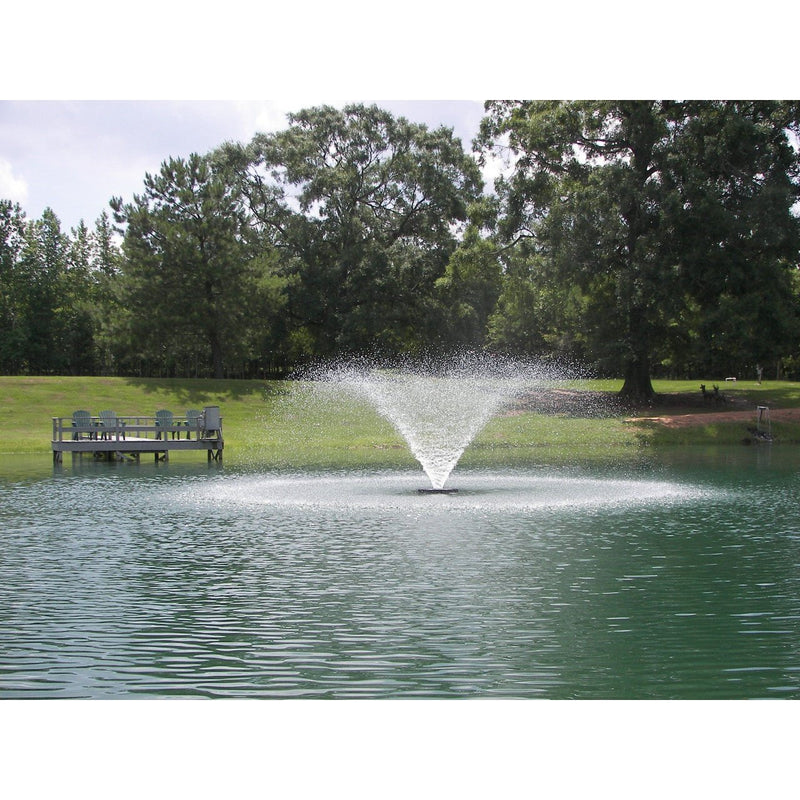
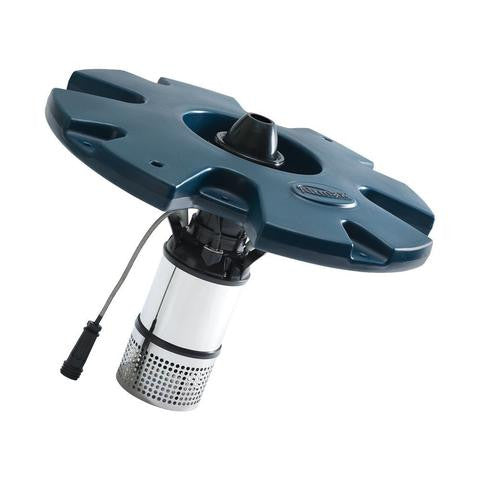
Subsurface Aeration vs. Surface Fountains
Choosing between a "bubbler" and a fountain is often a choice between function and form. The following table compares the two based on mechanical efficiency.
| Feature | Subsurface (Diffused) | Surface (Fountain) |
|---|---|---|
| Primary Goal | Ecosystem Health / Muck Removal | Aesthetics / Display |
| Oxygen Transfer | High (at depth) | Moderate (surface only) |
| Energy Efficiency | High (low HP, high volume) | Low (requires high HP to lift water) |
| Maintenance | Low (motor on shore) | High (motor in water) |
| Depth Limit | Up to 50+ feet | Effective only for top 4-6 feet |
Practical Tips for System Selection
To maximize the ROI of an aeration system, follow these technical best practices during the planning phase.
- **Calculate Volume correctly:** Use a bathymetric map to find the average depth. Total Gallons = Surface Area (Acres) × Average Depth (Feet) × 325,851.
- **Target 1.0 to 2.0 Turnovers per Day:** For general pond health, the system should be able to move the entire volume of the pond 1-2 times every 24 hours. High-biomass fish ponds may require 3.0+ turnovers.
- **Use Weighted Tubing:** Always use "lead-free" weighted airline. Non-weighted tubing will float to the surface, creating a trip hazard and an eyesore. It is nearly impossible to keep non-weighted tubing on the bottom using bricks or ties long-term.
- **Place Diffusers at Maximum Depth:** To get the largest "boil" and most water movement, place diffusers in the deepest areas. However, keep them roughly 12 inches off the bottom (using a weighted base or sled) to prevent them from sucking up loose muck and clogging.
Advanced Considerations for Practitioners
Serious pond managers should look into the "Alpha Factor" and compressor duty cycles to further refine their systems.
The **Alpha Factor** is a ratio used in wastewater engineering to describe how much the presence of surfactants or high salinity reduces oxygen transfer compared to clean water. In "dirty" ponds with high organic loads, the Alpha Factor can be as low as 0.6. This means you may need 40% more air than a standard "clean water" calculation suggests.
Additionally, consider the **Standard Aeration Efficiency (SAE)**, which is the pounds of oxygen transferred per horsepower-hour (lb O2/hp-hr). Rocking piston compressors generally offer the best balance of SAE and durability for deep-water applications. For shallow applications under 7 feet, linear diaphragm compressors offer significantly higher energy efficiency and lower noise levels (often under 50 dB).
Example: Sizing for a 1-Acre Pond
Let’s apply these principles to a standard 1-acre pond with an average depth of 8 feet.
1. **Calculate Total Volume:** 1 Acre × 8 Feet × 325,851 = approx. 2.6 million gallons.
2. **Determine Water Movement:** A 1/2 HP rocking piston compressor pushing air through two fine-bubble diffusers at 8 feet will move roughly 3,000 gallons per minute (GPM).
3. **Calculate Turnovers:** (3,000 GPM × 60 minutes × 24 hours) = 4.32 million gallons moved per day.
4. **Result:** 4.32 / 2.6 = 1.66 turnovers per day. This system is perfectly sized for a healthy trophy pond.
Final Thoughts
Transforming a stagnant pond into a thriving legacy requires moving beyond the surface and addressing the underlying biological oxygen demand. By installing a bottom-diffused aeration system, you effectively "flip the switch" on the pond's metabolic state, shifting from a slow, anaerobic decay to a high-efficiency aerobic ecosystem.
The technical success of the project relies on matching the compressor's PSI capabilities to the pond's depth and ensuring the CFM output provides at least one full water turnover every 24 hours. While the initial investment in high-quality rocking piston compressors and weighted diffusers is higher than "big box" alternatives, the reduction in algae management costs and the prevention of fish kills provide a clear mechanical and financial advantage.
Experimenting with diffuser placement and monitoring dissolved oxygen levels during the peak of summer will allow for further tuning. As the "biological dredging" effect takes hold and the muck layer recedes, the pond will naturally stabilize, securing its place as a family treasure for decades to come.