

Can Pond Aeration Reduce Mosquitoes?
Mosquitoes hate one thing more than chemicals: moving water. You don't need a chemical cocktail to keep mosquitoes away from your pond. Breaking the surface tension with aeration creates a 'no-fly zone' for breeding. Here’s the science of surface agitation.
Can Pond Aeration Reduce Mosquitoes?
Mosquito control via pond aeration is a mechanical strategy that addresses the biological requirements of the mosquito lifecycle. At its core, this method leverages fluid dynamics to disrupt the two most vulnerable stages of the insect's development: oviposition (egg-laying) and larval respiration. Stagnant water provides a stable, high-tension surface that mosquitoes require to land and deposit eggs. When a pond is effectively aerated, the resulting surface agitation eliminates this stability, making the environment unsuitable for reproduction.
The efficacy of this approach relies on the physics of surface tension, which is measured in dynes per centimeter. Pure water at standard temperature has a surface tension of approximately 72 dynes/cm. Mosquitoes have evolved specialized leg structures covered in hydrophobic scales and nanostructures that allow them to utilize this tension to stand on the water's surface without breaking through. Aeration systems, whether through bottom-diffused bubbles or surface impellers, constantly fracture this "skin" of the water. This mechanical disruption prevents the female from safely landing and significantly reduces the survival rate of any larvae that manage to hatch.
Real-world applications of this strategy are found in golf course ponds, agricultural reservoirs, and residential water features where chemical use is restricted or undesirable. In these settings, aeration serves a dual purpose. It manages the insect population while simultaneously improving the ecological health of the water body by increasing dissolved oxygen (DO) levels. This creates an environment where natural predators, such as dragonflies and certain fish species, can thrive and provide secondary control.
The Physics of Surface Tension and Oviposition
Oviposition is the process where a gravid female mosquito selects a site and deposits her eggs. Most species, including the common Culex and Anopheles, seek out stagnant water with high organic content. The lack of movement is a primary sensory cue for these insects. A perfectly still surface reflects polarized light in a specific way that signals a safe harbor for the next generation.
Mechanical agitation alters the optical and physical properties of the water surface. When a pond is active, the constant ripple patterns and "boil" created by an aerator break the light reflection. This visual interference often discourages females from even attempting to land. If a female does attempt to land on moving water, she faces the risk of her hydrophobic leg scales failing to maintain a grip. Once the insect’s body makes direct contact with the water, the surface tension pulls her down, leading to drowning.
Surface agitation also affects the stability of egg rafts. Culex mosquitoes lay eggs in cohesive rafts of 100 to 300 eggs. These rafts rely on the surface tension to stay afloat and organized. In a high-agitation environment, these rafts are frequently broken apart or submerged. Submergence is fatal for the embryos, as they require atmospheric oxygen to develop. By maintaining a turnover rate that keeps the entire surface in motion, you effectively eliminate the possibility of a successful hatch.
Larval Respiration and Fluid Dynamics
Larvae, often called "wigglers," are the second stage of the mosquito lifecycle and are entirely aquatic. Despite living in the water, they must breathe atmospheric air. Most species utilize a specialized respiratory siphon located at the posterior end of their body. They hang upside down from the water surface, using the surface tension to anchor their siphons to the air-water interface.
Breaking the surface tension directly impacts the larva's ability to stay at the surface. Research indicates that reducing the surface tension to below 41 dynes/cm—a feat easily achieved through mechanical turbulence or the introduction of organic surfactants—results in high mortality rates. In an aerated pond, the constant movement makes it physically impossible for the larvae to maintain their anchor. They spend excessive energy attempting to reach the surface, eventually dying of exhaustion or drowning.
Fluid movement also impacts the feeding habits of the larvae. These organisms are filter feeders that consume algae, bacteria, and organic detritus. In stagnant water, this food source often concentrates in a thin film on the surface. Aeration mixes the water column, dispersing these nutrients and making it harder for larvae to feed efficiently. The increased water velocity also forces the larvae into open areas where they are more visible to aquatic predators.
Types of Aeration Systems for Mosquito Control
Choosing the right mechanical system depends on the depth and shape of the pond. Not all aerators are created equal when it comes to pest management. Some systems excel at surface agitation, while others focus on deep-water circulation. Understanding the mechanics of each is vital for achieving a 100% "no-fly zone."
Bottom-Diffused Aeration
Bottom-diffused systems utilize an on-shore compressor that pumps air through weighted tubing to diffusers located at the pond's deepest points. As the bubbles rise, they create a vertical current known as "laminar flow." This process, called entrainment, pulls cold, oxygen-depleted water from the bottom and carries it to the surface. This creates a large "boil" area on the surface that is highly effective at preventing mosquito breeding.
Deep ponds (greater than 8 feet) benefit most from this setup. The efficiency of a diffused system increases with depth because the rising bubbles have more time to expand and move a larger volume of water. For mosquito control, multiple diffuser heads should be placed strategically to ensure there are no "dead zones" of stagnant water along the shoreline or in corners.
Surface Aerators and Fountains
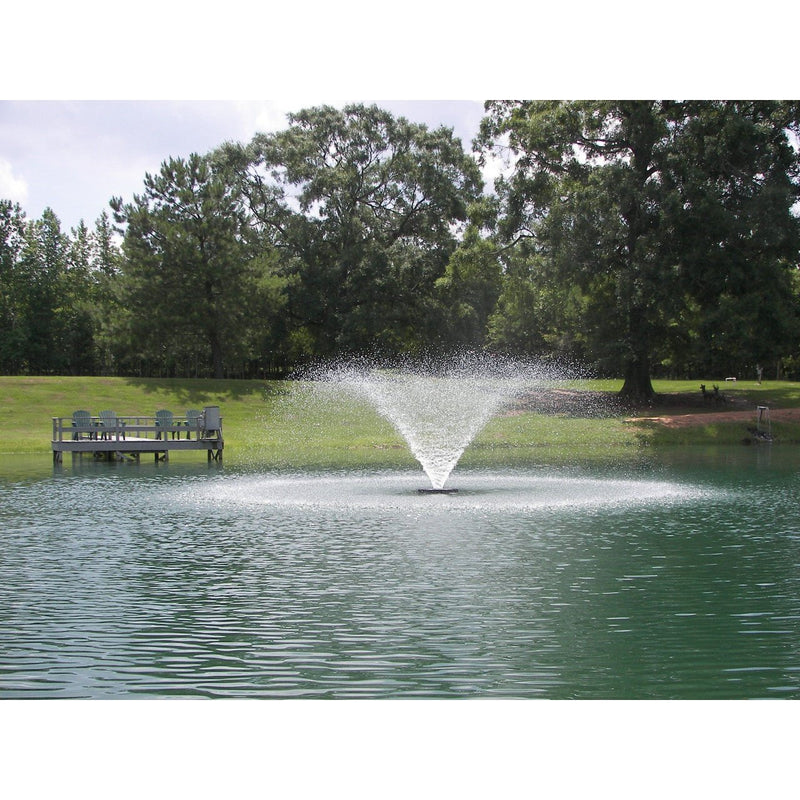
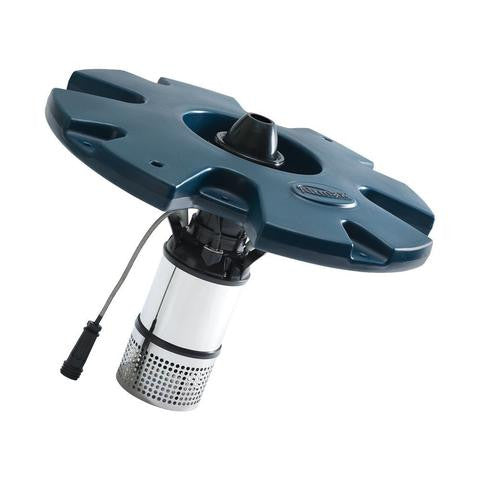
Surface aerators use an impeller or propeller to splash water into the air. These systems are designed specifically for high-volume surface agitation. They are incredibly effective at breaking surface tension but have limited depth penetration. A standard surface aerator can move thousands of gallons per minute (GPM), creating a large radius of moving water that is hostile to mosquitoes.
Decorative fountains are a subset of surface aerators. While they provide aesthetic value, they are generally less efficient at oxygenation than dedicated surface aerators. However, the heavy "fall" of water from a fountain spray provides excellent mechanical disruption of the surface. If the goal is strictly mosquito control in a shallow pond (less than 6 feet), a high-flow fountain or surface aerator is often the superior choice.
Technical Calibration: Sizing Your System
Success in mosquito suppression through aeration requires precise technical calibration. An undersized system will leave stagnant pockets where mosquitoes can still breed. The industry standard for effective aeration is a turnover rate of 1 to 2 times every 24 hours. This means the entire volume of the pond should pass through the aeration cycle at least once a day.
Calculating the required capacity involves several variables. First, determine the surface acreage and the total volume of the pond in gallons. For a typical one-acre pond with an average depth of 6 feet, the volume is approximately 1.95 million gallons. To achieve a single turnover in 24 hours, the aeration system must move roughly 1,354 gallons per minute.
Horsepower (HP) requirements are another critical metric. For standard mosquito control and oxygenation, 1.5 HP per surface acre is a reliable baseline. In warmer climates or ponds with high organic loads (which attract more mosquitoes), this should be increased to 2 HP per acre. Choosing a compressor with a higher Cubic Feet per Minute (CFM) rating for diffused systems allows for more diffuser disks, which spreads the surface agitation over a wider area.
Benefits Beyond Pest Management
Aeration provides ecological advantages that go far beyond killing mosquitoes. By addressing the root causes of water stagnation, these systems improve the overall chemical and biological balance of the pond. This creates a self-sustaining ecosystem that is naturally resistant to pests.
- Increased Dissolved Oxygen (DO): Aeration maintains DO levels above the critical 3-5 ppm (parts per million) threshold required for healthy aquatic life. High DO levels support aerobic bacteria, which are essential for breaking down organic muck on the pond floor.
- Reduction of Muck and Odors: Mosquitoes are attracted to the smell of decaying organic matter. Aerobic digestion reduces the accumulation of "muck" and eliminates the production of hydrogen sulfide and methane gases, making the pond less attractive to gravid females.
- Algae Suppression: Moving water inhibits the growth of certain types of blue-green algae (cyanobacteria). Since mosquito larvae feed on algae, reducing the food supply further limits the population.
- Thermal Destratification: Aeration prevents the formation of a thermocline (a sharp temperature gradient). This ensures that the entire water column remains habitable for fish and beneficial insects that prey on mosquito larvae.
Challenges and Common Mistakes
Even the best equipment can fail if installed or maintained incorrectly. One of the most frequent errors is the failure to address "dead zones." These are areas of a pond, such as shallow coves or dense weed beds, where water remains stagnant despite the presence of an aerator. Mosquitoes are experts at finding these small sanctuaries.
Proper placement of diffusers or surface units is essential. In irregularly shaped ponds, a single central unit is rarely sufficient. Instead, multiple smaller units should be distributed to ensure current reaches every corner. Another common mistake is running the system only during the day. Mosquitoes are primarily crepuscular or nocturnal breeders. Stopping the aeration at night provides a window of opportunity for egg-laying. For effective control, systems should run 24/7 during the peak breeding season.
Mechanical failure is a risk that requires monitoring. Compressors have wear parts, such as diaphragms or vanes, that eventually lose efficiency. A drop in PSI (pounds per square inch) or a visible reduction in surface "boil" indicates that the system is no longer providing adequate agitation. Regular inspections are necessary to ensure the "no-fly zone" remains intact.
Limitations and Environmental Constraints
Aeration is not a silver bullet for every environment. It has realistic constraints that must be understood to manage expectations. The primary limitation is the physical boundary of the water itself. While aeration controls breeding *in* the pond, it does nothing to stop mosquitoes from breeding in nearby containers, gutters, or damp soil.
Dense aquatic vegetation presents another challenge. Thick mats of lily pads or submerged weeds like milfoil can dampen the effects of water movement. The vegetation acts as a baffle, creating micro-climates of stagnant water between the leaves where larvae can thrive. In ponds with heavy weed growth, mechanical or biological weed management must be paired with aeration to achieve full mosquito suppression.
Power availability is a practical constraint. Aeration systems require a consistent electrical source. For remote ponds, solar-powered aeration is an option, but these systems often struggle to provide 24-hour operation without expensive battery backups. If the system cannot run through the night, its effectiveness as a mosquito deterrent is significantly diminished.
Comparison: Synthetic Fog vs. Natural Motion
When evaluating mosquito control methods, it is helpful to compare mechanical aeration against traditional chemical fogging. While both aim to reduce populations, they operate on different principles and timelines. Aeration focuses on long-term prevention through environmental modification, while fogging provides immediate, temporary relief by killing adult insects.
| Factor | Mechanical Aeration | Synthetic Fogging |
|---|---|---|
| Primary Target | Eggs and Larvae (Prevention) | Adults (Immediate Kill) |
| Environmental Impact | Positive (Improves water health) | Negative (May affect non-target insects) |
| Duration of Effect | Continuous (As long as power is on) | Temporary (Requires frequent re-application) |
| Initial Cost | Moderate to High (Equipment purchase) | Low to Moderate (Service/Chemicals) |
| Maintenance | Annual mechanical check | Bi-weekly or monthly applications |
| Operating Principle | Surface tension disruption | Neurotoxic interference |
Practical Tips and Best Practices
Optimizing an aeration system for mosquito control requires attention to detail. Start by identifying the prevailing wind direction. Wind can help move the surface ripples created by your aerator, extending its reach. Placing your surface aerator on the upwind side of the pond allows the wind to carry the agitation across the entire surface.
Shoreline management is equally important. Keep the edges of the pond clear of overhanging tall grass and debris. This reduces the number of sheltered spots where mosquitoes can hide from the wind and water movement. If you have "dead spots" that are too shallow for a diffuser, consider a small circulator or "muck mover." These are specialized horizontal aerators that can be aimed at specific problem areas to keep the water moving.
Monitoring the "boil" is a simple way to check efficiency. A healthy diffused aeration system should produce a visible mound of water on the surface. If the boil is weak or non-existent, check for leaks in the airline or clogged diffuser membranes. Cleaning the membranes once or twice a year with a mild acid solution or a stiff brush will maintain optimal CFM and agitation.
Advanced Considerations: Fluid Entrainment and Oxygen Transfer
Serious practitioners should understand the concept of the "oxygen transfer rate" (OTR). This is a measure of how much oxygen the system can move into the water per hour per horsepower. Surface aerators typically have a higher OTR than diffused systems in shallow water because they create more air-water interface through splashing.
However, bottom-diffused systems are superior at "induced circulation." As the bubbles rise, they create a current that can move thousands of cubic feet of water. This is crucial for mosquito control because it ensures that the water at the edges is eventually cycled through the high-agitation zone. For large lakes, engineers use computer modeling to determine the "Lifting Rate," ensuring the entire volume of the lake is turned over frequently enough to prevent any stagnation.
Scaling a system for a large reservoir requires an understanding of hydrostatic pressure. As water depth increases, the compressor must work harder to push air through the diffusers. This backpressure can reduce the airflow. High-quality rocking piston compressors are designed to handle this pressure, maintaining the high CFM needed to keep the surface boiling and the mosquitoes at bay.
Example Scenario: 1-Acre Residential Pond
Consider a 1-acre pond with a maximum depth of 12 feet and a circular shape. The owner is experiencing heavy mosquito activity. A technical assessment determines that a single turnover every 24 hours is required. Given the 12-foot depth, a bottom-diffused system is the most efficient choice.
The system design includes a 1/2 HP rocking piston compressor capable of delivering 4.5 CFM at a depth of 12 feet. This compressor feeds three dual-disk diffusers placed in a triangular pattern on the pond floor. This arrangement ensures that the "boil" from each diffuser covers a significant portion of the surface, with the overlapping currents reaching the shoreline.
By running this system 24/7, the owner achieves several things. First, the surface tension is constantly broken across 80% of the pond. Second, the vertical circulation pulls larvae from the shoreline into the deeper, moving water where they cannot feed or breathe. Within two weeks of installation, the mosquito population in the immediate vicinity of the pond typically drops by over 90% as the breeding cycle is effectively terminated.
Final Thoughts
Pond aeration is a powerful, non-chemical tool in the fight against mosquitoes. By understanding the mechanical requirements of the mosquito lifecycle and the physics of surface tension, you can transform a stagnant breeding ground into a vibrant, moving ecosystem. The key is to focus on turnover rates, surface agitation, and the elimination of dead zones.
While the initial investment in high-quality aeration equipment can be higher than a season of chemical treatments, the long-term benefits are undeniable. You get a pond that is clearer, healthier, and far less hospitable to pests. It is a sustainable approach that works with the laws of physics rather than against them.
Encouraging natural predators and maintaining shoreline health will further enhance the results of your aeration system. Experiment with different diffuser placements and monitor your results. With the right technical setup, you can enjoy your waterfront property without the constant nuisance of breeding mosquitoes.