

Blue-Green Algae In Ponds: Warning Signs, Risks, And Treatment Options
Chemicals treat the symptom; biology treats the cause. Blue-green algae isn't just ugly—it's a cyanobacteria that can be toxic. Here is how to spot it and stop it naturally.
Cyanobacteria Isn't Really An Algae
Cyanobacteria, commonly referred to as blue-green algae, are a phylum of photosynthetic bacteria that obtain their energy through photosynthesis. Unlike eukaryotic algae, these organisms are prokaryotic and lack membrane-bound organelles. They have existed for approximately 3.5 billion years and are primary drivers of nitrogen fixation in aquatic ecosystems.
Excessive nutrient loading, specifically phosphorus and nitrogen, facilitates the rapid proliferation of these organisms into Harmful Algal Blooms (HABs). These blooms are characterized by high cell densities, often exceeding 100,000 cells per mL. Environmental conditions such as stagnant water, elevated temperatures, and thermal stratification further catalyze their growth.
Detection relies on specific visual and chemical indicators. Visual signs include "pea soup" water clarity, oily surface scums, or blue-green streaks that resemble spilled paint. Chemical risks involve the production of cyanotoxins such as microcystins and cylindrospermopsins. The EPA recommends recreational advisories when microcystin concentrations exceed 8 µg/L and cylindrospermopsin concentrations exceed 15 µg/L.
Natural treatment options prioritize the restoration of ecological balance rather than the immediate eradication of biomass. Biological control focuses on nutrient sequestration and competitive inhibition, while mechanical methods like ultrasonic technology disrupt the physical structure of the cells.
How It Works: Mechanisms of Biological and Mechanical Control
Biological remediation utilizes specific strains of beneficial bacteria, primarily within the Bacillus genus, to outcompete cyanobacteria for resources. These microbes accelerate the decomposition of organic matter in the benthic zone, reducing the available internal nutrient load.
Bacillus subtilis and Bacillus licheniformis are frequently deployed for their high metabolic rates. These bacteria produce extracellular enzymes that break down complex organic polymers into simpler, soluble compounds. This process reduces the "muck" layer, which often acts as a reservoir for phosphorus. Data indicates that targeted bio-augmentation can reduce sediment phosphorus by up to 60% within a 15-day period under controlled conditions.
Nitrogen removal occurs through heterotrophic nitrification and aerobic denitrification. Specific strains, such as Bacillus sp. SC16, have demonstrated the ability to remove up to 97% of nitrate and 99.9% of nitrite under aerobic conditions. This removal limits the nitrogen available for cyanobacteria that cannot fix atmospheric nitrogen.
Ultrasonic technology provides a mechanical alternative to chemical algaecides. These devices emit specific sound frequencies that create a resonance effect within the cyanobacteria. Most cyanobacteria utilize gas vesicles for buoyancy control, allowing them to migrate vertically in the water column to optimize light and nutrient intake. Ultrasonic waves at frequencies near 20 kHz cause these vesicles to vibrate and eventually rupture. Loss of buoyancy forces the cells to sink to the darker, colder depths of the pond where they cannot photosynthesize, leading to natural cell death.
Benefits of Biological and Mechanical Remediation
Biological and mechanical controls offer long-term stability that chemical treatments cannot replicate. Chemical algaecides like copper sulfate induce rapid cell lysis, which triggers the immediate release of intracellular toxins into the water column. This spike in toxin levels can be lethal to fish and harmful to humans.
Prevention of Toxin Spikes: Biological methods inhibit growth gradually or sequester nutrients, preventing the mass release of microcystins. Mechanical methods like ultrasound kill the cells without immediately rupturing the cell wall in a way that maximizes toxin discharge.
Restoration of Nutrient Ratios: Management based on the Redfield Ratio (16:1 Nitrogen to Phosphorus) ensures that the pond environment favors beneficial green algae over cyanobacteria. Promoting a higher N:P ratio reduces the competitive advantage of nitrogen-fixing cyanobacteria.
Sediment Reduction: Microbial additives can significantly reduce the depth of organic sludge. Field studies have shown sediment depth reductions of over 7 inches over a four-month treatment cycle. This increases the total volume of the pond and improves dissolved oxygen (DO) capacity.
Cost Efficiency: While initial hardware costs for ultrasonic systems or high-grade aeration are higher, the reduction in recurring chemical purchases and labor often results in a lower total cost of ownership. Some watershed projects have reported savings exceeding $100,000 after transitioning from 40 years of chemical reliance to integrated biological and mechanical systems.
Challenges and Common Mistakes in Natural Control
Successful natural remediation requires precision and patience. A frequent error is the failure to address the external nutrient load before starting biological treatments. Runoff from fertilized lawns, agricultural fields, or livestock areas can overwhelm the capacity of beneficial bacteria to sequester nutrients.
Incorrect Aeration Placement: Aeration is critical for supporting aerobic bacteria, but improper placement can be counterproductive. Diffusers placed in the deepest part of the pond must be powerful enough to break thermal stratification. Failure to achieve full water column mixing leaves an anaerobic "dead zone" at the bottom where phosphorus is continuously released from the sediment.
Over-expectations for Speed: Biological control is a slow process compared to the 24-hour results seen with chelated copper. Users often abandon natural treatments prematurely because they do not see immediate visual changes, leading to a return to chemical "quick fixes" that restart the cycle of eutrophication.
Inaccurate Species Identification: Not all green material in a pond is cyanobacteria. Applying ultrasonic frequencies tuned for Microcystis to a pond dominated by filamentous green algae may result in poor efficacy if the frequency range is too narrow.
Limitations: When Natural Methods May Not Suffice
Environmental constraints can limit the effectiveness of biological and mechanical strategies. Shallow ponds with high flow-through rates (low hydraulic retention time) are difficult to treat with bacteria because the microbes are flushed out before they can establish a colony.
Extreme Eutrophication: Ponds classified as hypereutrophic—those with extremely high nutrient concentrations—may require a multi-stage approach. In these cases, a "clean" chemical intervention using hydrogen peroxide-based algaecides (sodium carbonate peroxyhydrate) may be necessary to knock down the initial bloom before biological controls can maintain the balance. Hydrogen peroxide is preferred over copper because it breaks down into water and oxygen and can degrade some cyanotoxins during the process.
Water Chemistry: Extremely low pH levels can inhibit the metabolic activity of Bacillus strains. Most beneficial microbes thrive in a pH range of 6.5 to 8.5. If the water is too acidic or alkaline, the bacteria will remain dormant or die, rendering bio-augmentation ineffective.
Geometry and Obstructions: Ultrasonic devices require a clear line of sight to be effective. Ponds with complex shorelines, islands, or heavy stands of cattails create "shadow zones" where the sound waves cannot reach, allowing cyanobacteria to persist in protected pockets.
Comparison of Treatment Methodologies
The following table compares the metrics of three primary pond management strategies.
| Factor | Chemical (Copper) | Biological (Microbes) | Mechanical (Ultrasound) |
|---|---|---|---|
| Speed of Action | 1–3 Days | 2–6 Weeks | 1–4 Weeks |
| Toxin Risk | High (Immediate Release) | Low (Suppression) | Low (Cell Sinking) |
| Nutrient Impact | Increases (Release from Dead Cells) | Decreases (Sequestration) | Neutral |
| Long-Term Sustainability | Low (Cycle of Re-blooming) | High | High |
Practical Tips for Pond Optimization
Monitoring water quality parameters is the first step toward effective management. Investing in a reliable testing kit to measure Nitrate (NO3) and Phosphate (PO4) allows for the calculation of the current N:P ratio. If the ratio is below 10:1, the risk of cyanobacteria is high.
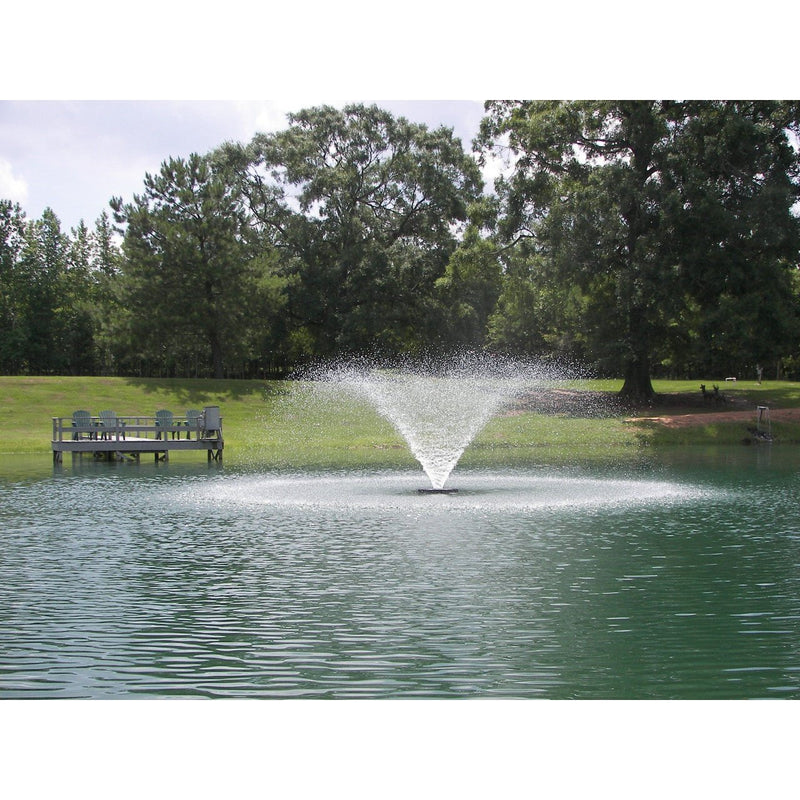
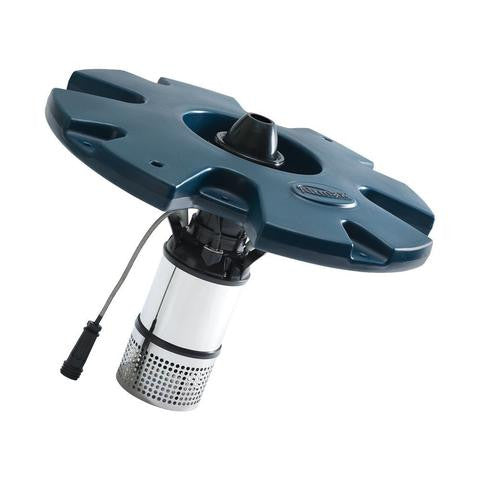
Enhance Dissolved Oxygen: Maintaining DO levels above 5 mg/L is essential for both fish health and the efficiency of aerobic bacteria. Bottom-diffused aeration is the most efficient method for achieving this in ponds deeper than 6 feet. Surface fountains are primarily aesthetic and provide minimal gas exchange at the sediment-water interface.
Monitor ORP (Oxidation-Reduction Potential): ORP measures the "cleansing power" of the water. High-quality water typically maintains an ORP between +200 mV and +500 mV. Levels below +200 mV indicate an anaerobic environment conducive to nutrient release and algal growth.
Utilize Shading: Reducing the amount of sunlight reaching the water column can limit photosynthetic activity. While pond dyes are common, establishing floating native vegetation like water lilies can provide natural shade and consume excess nutrients simultaneously.
Advanced Considerations: The Stoichiometry of Pond Health
Serious practitioners should understand the Stoichiometry of nutrient limitation. The Redfield Ratio (16N:1P) is a benchmark for marine phytoplankton, but freshwater systems are often phosphorus-limited. Research suggests that seston (suspended matter) ratios in freshwater may actually trend closer to 22N:1P in healthy, P-limited environments.
Manipulation of these ratios through targeted nitrogen addition or phosphate binding (using materials like lanthanum-modified clay) can "flip" a pond from a cyanobacteria-dominated state to one dominated by diatoms or green algae. Green algae are more palatable to zooplankton, which in turn support the fish population, creating a healthy trophic cascade.
Scaling considerations for larger water bodies involve the use of multi-frequency ultrasonic arrays and industrial-scale bio-reactors for microbial inoculation. For reservoirs, satellite-based remote sensing (using Sentinel-2 data) can track Chlorophyll-a and phycocyanin levels, providing early warning signs of blooms before they become visible to the naked eye.
Example Scenario: Remediation of a 1-Acre Eutrophic Pond
Consider a 1-acre residential pond with a maximum depth of 10 feet. The initial water analysis shows a phosphorus concentration of 150 µg/L and a nitrogen concentration of 600 µg/L, resulting in a 4:1 N:P ratio. A dense bloom of Anabaena is present.
The first step involves installing a 1/2 HP bottom-diffused aeration system with two diffusers to eliminate thermal stratification and raise DO levels to 6.5 mg/L at the bottom. This shifts the sediment interface from anaerobic to aerobic, slowing the release of "legacy" phosphorus from the muck.
Next, a bio-augmentation schedule is implemented using 5 lbs of a Bacillus-based concentrate every two weeks for three months. Simultaneously, an ultrasonic device is deployed in the center of the pond to disrupt the buoyancy of the current bloom.
After 60 days, the phosphorus levels drop to 60 µg/L as the bacteria sequester the nutrient. The N:P ratio shifts toward 12:1. The cyanobacteria count drops from 85,000 cells/mL to 5,000 cells/mL, and water clarity, measured by Secchi disk, increases from 12 inches to 48 inches.
Final Thoughts
Managing blue-green algae requires a transition from reactive chemical intervention to proactive biological and mechanical stewardship. Focus on the underlying nutrient imbalances and physical water conditions that allow cyanobacteria to thrive. Achieving a stable pond ecosystem is a data-driven process that prioritizes dissolved oxygen, nutrient ratios, and the support of beneficial microbial life.
Consistent monitoring of parameters like ORP and phosphorus levels provides the necessary feedback to tune treatment strategies. Implementing these natural controls not only eliminates the immediate threat of toxic blooms but also builds a resilient aquatic environment that requires less maintenance over time. Experimentation with different bacterial strains and aeration configurations will yield the best results for specific local conditions.